









Industry news


View: 414

Release time:2026-06-12
When comparing LED display technologies, contrast ratio is one of the most important factors affecting image quality. While brightness often grabs attention, the ability to produce deep blacks ultimately determines how vivid, immersive, and realistic the picture looks.
The biggest difference between white SMD, black SMD, and COB (Chip on Board) technology lies in how each design handles ambient light reflection.
The key to achieving high contrast is reducing the brightness of black areas. In other words, the darker an LED display appears when pixels are off, the higher its effective contrast ratio.
Conventional SMD LEDs typically use white or silver reflective cups around the LED chips, and the PCB often features a white solder mask.
This design maximizes light output by reflecting as much emitted light as possible. However, it also reflects external light from office lighting or sunlight. As a result, the screen surface appears gray rather than black when displaying dark content.
Because of this high reflectivity—often around 15% to 25%—white SMD displays can struggle to maintain strong contrast in bright environments.
Black SMD technology replaces reflective white materials with black packaging and dark PCBs.
These darker components absorb more ambient light and reduce surface reflections, typically lowering reflectivity to around 6% to 12%. Under controlled viewing conditions, black SMD displays can achieve contrast ratios ranging from 1,500:1 to 5,000:1, providing noticeably deeper blacks and richer images.
However, each SMD package still exists as an individual component with tiny gaps and height differences between LEDs. Those physical structures can create small amounts of light reflection or refraction at certain viewing angles.
COB technology eliminates the traditional LED package altogether. Instead, the LED chips mount directly onto the substrate and are covered by a continuous layer of black epoxy resin or another light-absorbing protective material.
The result is an almost seamless black surface with minimal gaps between pixels. This design dramatically reduces ambient light reflection, often to 2% to 5%, allowing the display to produce exceptionally deep blacks.
Depending on the implementation, native contrast ratios can exceed 5,000:1 and may even reach 25,000:1 in optimized environments.
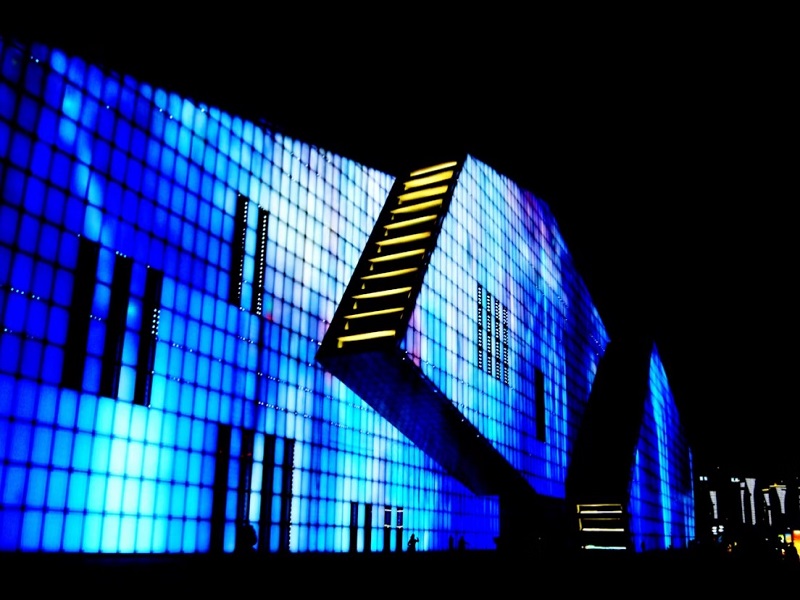
Technical specifications only tell part of the story. The visual experience becomes much more obvious in everyday environments such as offices, conference rooms, or exhibition halls with lighting levels around 500 lux.
White SMD displays often show dark scenes with a grayish appearance because reflected ambient light lifts the black level. Movies and shadow-heavy content may appear washed out.
Black SMD displays deliver significantly deeper blacks and satisfy the needs of most commercial installations. However, careful observers may still notice slight glow or reduced depth in scenes with large black backgrounds or HDR content.
COB displays produce blacks that appear genuinely black, thanks to their extremely low reflectivity. Non-emitting pixels blend naturally into the display surface, making colors look more vibrant and giving images greater depth and realism.
This superior visual performance explains why COB technology has become increasingly popular in premium applications such as cinemas, virtual production studios, XR environments, broadcast facilities, and mission-critical control rooms.
The decision ultimately depends on balancing performance, pixel pitch, durability, and budget.
COB is an excellent choice when:
Your project demands exceptional contrast and color performance.
You require ultra-fine pixel pitches, typically below P1.5 or even P0.7.
Durability is a priority, since the resin-coated surface offers excellent protection against dust, impact, and accidental contact.
Budget is less restrictive and premium performance justifies the investment.
Black SMD remains the preferred option for many indoor commercial projects, including:
Corporate showrooms
Conference rooms
Retail displays
Exhibition spaces
With typical pixel pitches between P1.2 and P2.5, it delivers strong contrast at a more competitive price point, making it one of the most cost-effective solutions on the market.
Although less common in premium indoor installations, white SMD technology still has practical uses where:
Maximum brightness is more important than contrast.
The display operates primarily outdoors.
Budget constraints outweigh the need for superior black levels.
The biggest contrast advantage of COB technology comes from its seamless, highly light-absorbing surface, which minimizes ambient reflections and produces exceptionally deep blacks. Black SMD offers an effective compromise between cost and performance by reducing reflectivity while maintaining affordability. White SMD, meanwhile, remains suitable for applications where brightness and economy take precedence over premium image quality.
For projects that prioritize cinematic visuals, HDR content, or close viewing distances, investing in higher-contrast technologies such as COB can significantly enhance the overall viewing experience.
 +86 18688923792
  andy@tosled.com