












Industry news


View: 497

Release time:2026-04-22
As LED display technology evolves, buyers often compare SMD (Surface-Mounted Device) and COB (Chip-on-Board) solutions. While both serve similar purposes, they differ significantly in structure, performance, and application. Understanding these differences helps you make a smarter investment.
First, the core distinction lies in how manufacturers package the LEDs.
SMD LED displays mount individual LED chips onto a PCB, then encapsulate them nto separate lamp beads.
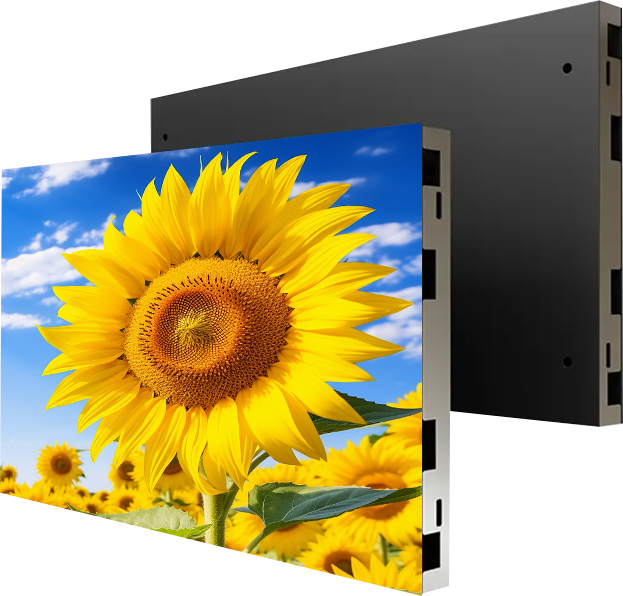
COB LED displays mount multiple LED chips directly onto the PCB and encapsulate them as a single module.
As a result, COB offers a more integrated structure, while SMD remains modular and easier to repair.
Next, consider pixel density.
SMD technology typically supports pixel pitches down to around P0.9–P1.2.
COB technology easily achieves ultra-fine pitches (P0.4–P0.9).
Therefore, COB is the better choice for high-resolution indoor environments like control rooms or broadcast studios.
COB displays excel in durability.
COB panels feature a fully sealed surface, making them resistant to dust, moisture, and impact.
SMD displays expose lamp beads, which makes them more vulnerable to physical damage.
Consequently, COB works better in high-traffic or demanding environments.

Both technologies deliver strong visuals, but they differ in subtle ways.
COB provides better contrast and deeper blacks due to its surface coating.
SMD offers wider viewing angles and consistent brightness.
In practice, COB performs better in controlled indoor lighting, while SMD adapts well to varied environments.
Thermal management plays a critical role in LED lifespan.
COB integrates chips directly onto the board, improving heat dissipation efficiency.
SMD relies on individual packaging, which slightly limits thermal performance.
Better heat control means COB displays often last longer under continuous operation.
Finally, budget considerations matter.
SMD displays are more affordable and widely available.
COB displays cost more upfront but offer lower maintenance and longer lifespan.
If you prioritize long-term reliability, COB justifies the higher investment.
In summary, choose SMD if you need flexibility and cost efficiency. On the other hand, choose COB if you demand durability, ultra-high resolution, and premium performance. Your decision should align with your application, environment, and budget.
 +86 18688923792
  andy@tosled.com