




Industry news


View: 447

Release time:2026-06-23
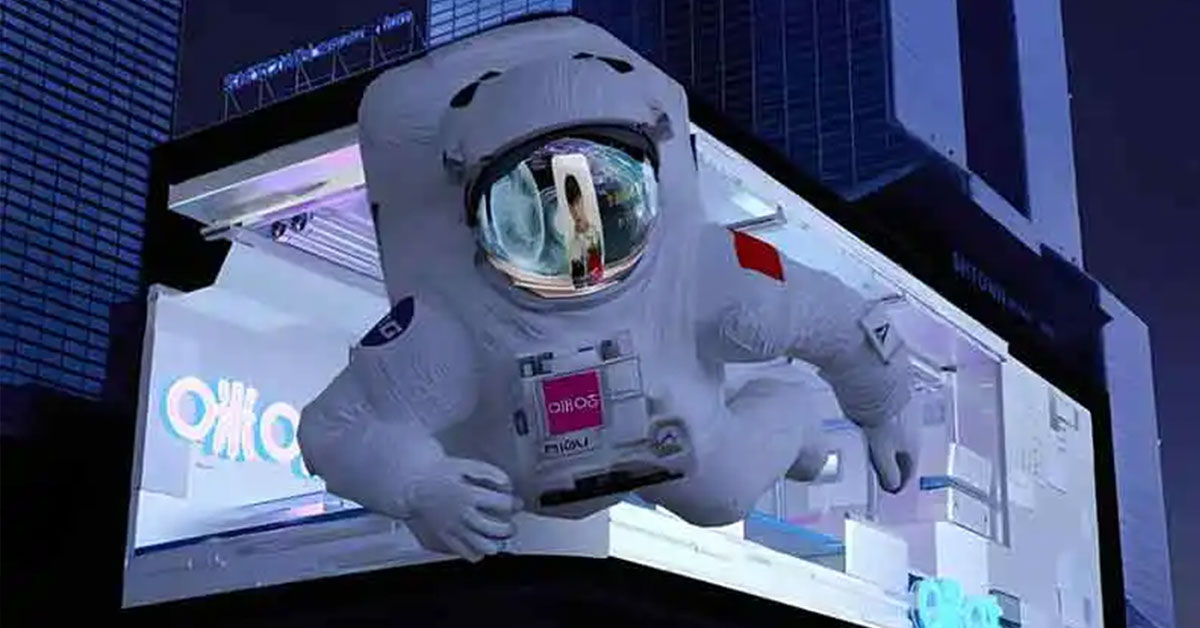
Seamless curved LED displays have transformed the way people experience digital visuals. These screens create breathtaking 3D illusions that appear to float in midair, even though the display surface is completely flat. Many people refer to this effect as naked-eye 3D because viewers can enjoy the experience without wearing 3D glasses or VR headsets.
The secret behind this technology lies in a combination of human visual perception, carefully engineered screen structures, and specially designed content. In other words, a seamless curved LED display works as a highly calculated visual illusion that tricks the brain into seeing depth where none actually exists.
To create a convincing sense of depth and realism, designers combine several key techniques.
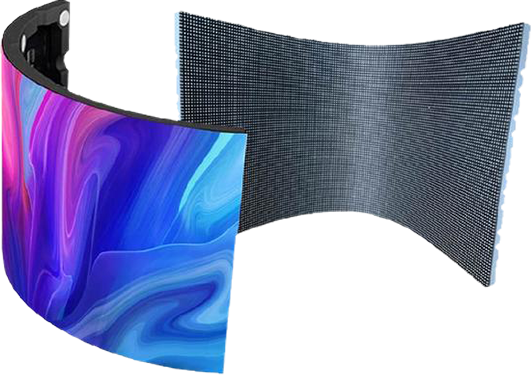
Most large naked-eye 3D LED displays use a curved or corner-shaped structure, often installed on the corner of a building.
This design plays an important role for several reasons.
First, it eliminates visible gaps between display surfaces. Traditional flat LED screens often create visible seams or borders that break the illusion. In contrast, a seamless curved LED display allows images to flow smoothly from one side to the other.
Second, the corner naturally creates two viewing planes. As a result, the human brain gains additional visual references that help it interpret depth and perspective more realistically.
Simply put, the curved structure provides the physical foundation for the entire 3D illusion.
The most important software technique behind naked-eye 3D is anamorphic perspective design.
Content creators do not produce videos in the same way they would for a standard LED screen. Instead, they intentionally stretch, distort, and reshape images according to a specific viewing angle.
This special viewing location is often called the sweet spot.
When viewers stand at the sweet spot, the distorted content appears perfectly normal. More importantly, objects seem to extend deep into the screen or project outward into real space.
As a result, the audience experiences a realistic three-dimensional effect even though they are looking at a flat display surface.
Designers often strengthen the illusion by creating a virtual frame inside the screen.
For example, they may design a digital window, a room, or a building facade that blends naturally with the surrounding architecture.
Once viewers accept this virtual environment, designers can introduce the most dramatic effect: objects that appear to break out of the screen.
A giant whale may swim beyond the edge of the display. A sports car may burst through a virtual wall. A dragon may fly out into open space.
At the same time, carefully placed shadows and lighting effects make these objects appear physically present.
Because the brain relies heavily on shadows to judge depth, these visual cues significantly increase the realism of the illusion.
 +86 18688923792
  andy@tosled.com