
Industry news


View: 558

Release time:2026-03-11
In the era of social media, brands compete not only for attention but also for shareability. People no longer photograph ordinary advertising boards. Instead, they share spaces that feel unique, immersive, and visually striking. As a result, many brands now design installations that encourage visitors to take photos and post them online.
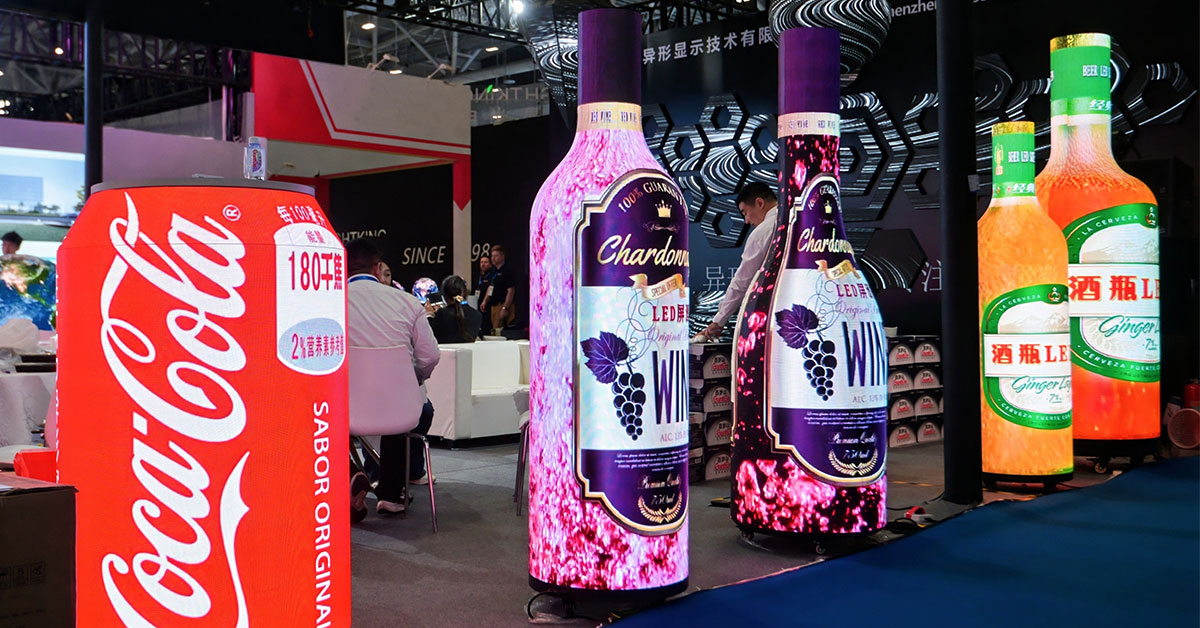
Among these installations, the creative can-shaped LED display has become a powerful marketing tool. Its cylindrical structure, dynamic visuals, and product-inspired design help brands create highly shareable “check-in” spots. When visitors take photos or videos and post them on platforms such as Instagram, TikTok, or Xiaohongshu, the brand gains organic exposure.
This article explains how can-shaped LED displays increase social media engagement and why many brands now use them in marketing campaigns.
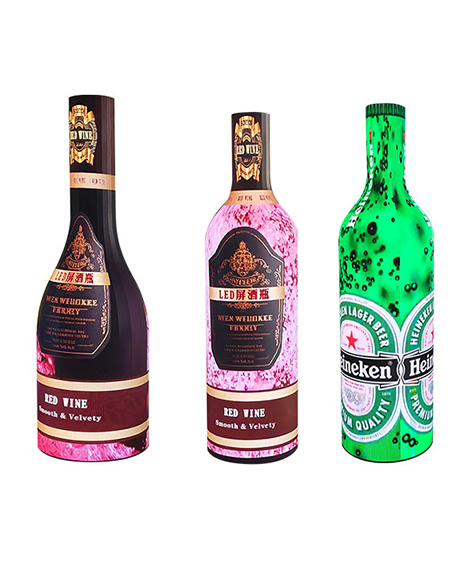
A can-shaped LED display is a cylindrical LED screen designed to resemble a beverage can or product container. The display uses curved LED modules to form a smooth 360-degree screen surface. Unlike traditional flat displays, the cylindrical structure allows audiences to view content from every direction.
Common indoor models include:
P2.5 Indoor Can-Shaped LED Display
· Pixel pitch: P2.5
· Typical diameter: 800 mm – 1200 mm
· Height: 2 – 2.5 m
· Viewing distance: 3 – 8 m
· Application: shopping malls, exhibitions, brand pop-up stores
P3 Cylindrical LED Advertising Display
· Pixel pitch: P3
· Diameter: 1 – 1.5 m
· Height: 2 – 3 m
· Viewing distance: 5 – 10 m
· Application: retail spaces, event marketing, brand promotion
These displays combine digital advertising and spatial design, which makes them ideal for experiential marketing.

Not every LED screen attracts social media attention. A successful “check-in installation” must create a memorable visual experience. Can-shaped LED displays achieve this through several key advantages.
Traditional LED screens follow a rectangular format. Visitors often see them as standard advertising equipment. As a result, they rarely stop to take photos.
A can-shaped LED display changes this perception. The structure resembles a giant beverage can or branded container, which immediately draws attention. People naturally approach it, observe it, and take pictures.
Because the installation looks like an art piece instead of a billboard, it encourages visitors to interact with it.
Flat screens face only one direction. Visitors must stand in front of the screen to capture a photo.
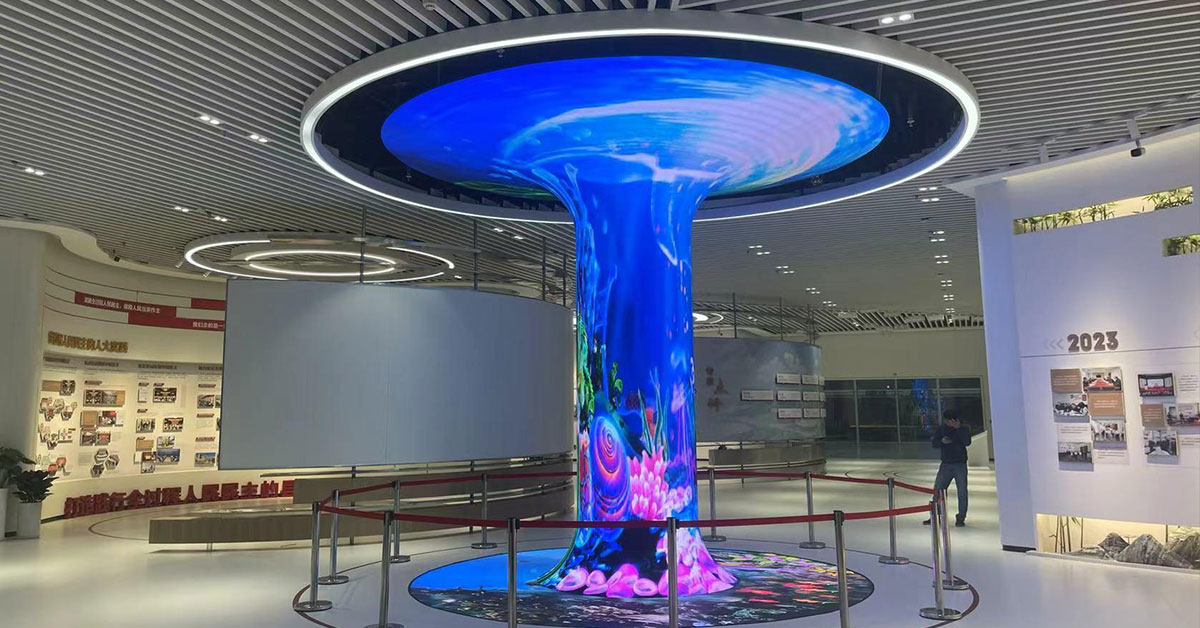
A cylindrical LED display solves this limitation. The screen wraps content around the entire structure, so every angle shows visuals. Visitors can walk around the installation and record videos from different perspectives.
This feature increases the chance that visitors will take photos or record short videos for social media.
Modern social media platforms favor short video content. Static decorations rarely generate strong engagement.
A can-shaped LED screen can play:
· animated product visuals
· brand storytelling videos
· interactive motion graphics
· themed promotional content
For example, a beverage brand might display a digital animation of a drink bursting from a can. When visitors record this moment, the video looks energetic and visually appealing. This type of dynamic content spreads easily on social media.
Brands can also add interactive elements to their cylindrical LED displays. These features make visitors part of the experience.
Examples include:
· QR code interaction
· motion sensors that trigger animation
· real-time social media feeds
· AR filters linked to the display
When visitors interact with the installation, they feel more involved in the brand experience. As a result, they are more likely to share their experience online.
 +86 18688923792
  andy@tosled.com