
Industry news


View: 340

Release time:2026-06-16
In today's competitive restaurant industry, eye-catching visual experiences help brands stand out. Instead of installing a traditional rectangular screen, many sushi restaurants now choose custom sushi-shaped LED displays to attract customers, strengthen their identity, and create memorable dining environments.
Whether you want to replicate a salmon nigiri, a maki roll, or a rice ball, modern LED technology makes these creative designs possible.
A sushi-inspired LED display does more than play videos. It becomes part of the restaurant's décor and marketing strategy.
Key benefits include:
Capture attention from passersby with a unique storefront display.
Reinforce your brand through customized visual design.
Showcase menu items, promotions, and chef demonstrations.
Create social media-worthy photo opportunities that encourage customer sharing.
Transform static decorations into dynamic digital experiences.
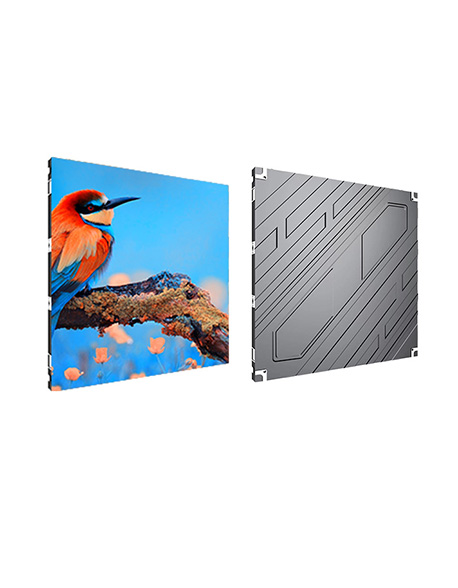
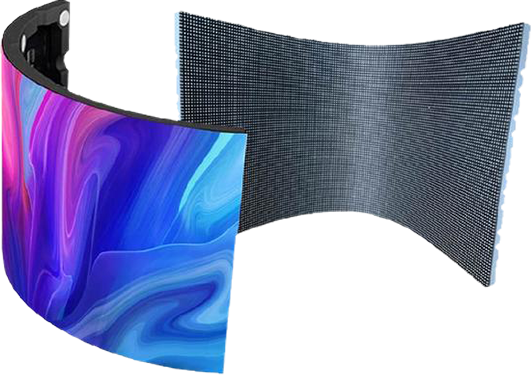
For most sushi-shaped projects, flexible LED modules offer the best balance of creativity and practicality.
These modules use flexible FPC circuits instead of rigid PCBs, allowing installers to bend them around curved surfaces and complex structures.
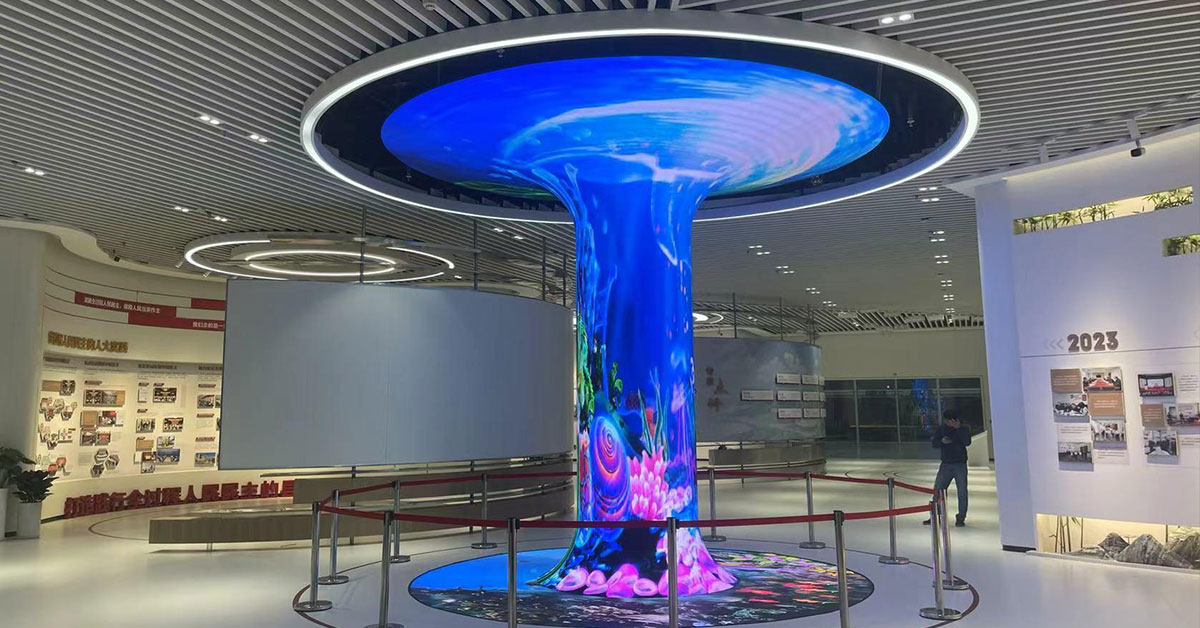
Create cylindrical, curved, wave-shaped, or spiral installations.
Maintain consistent image quality even on bent surfaces.
Reduce installation complexity with lightweight construction and magnetic mounting options.
Simplify maintenance because technicians can replace individual modules instead of rebuilding the entire display.
This solution works especially well for sushi-inspired curved shells, decorative columns, and custom counter installations.
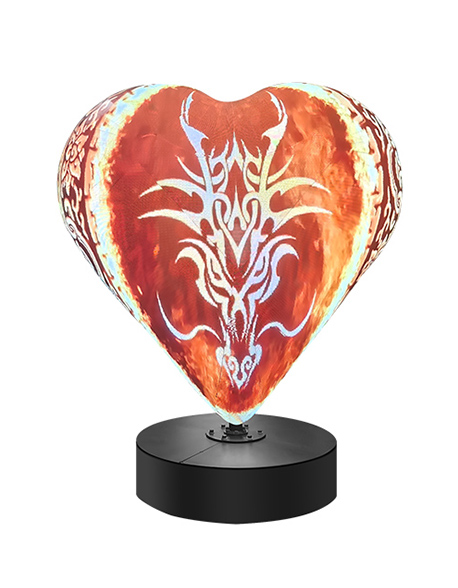
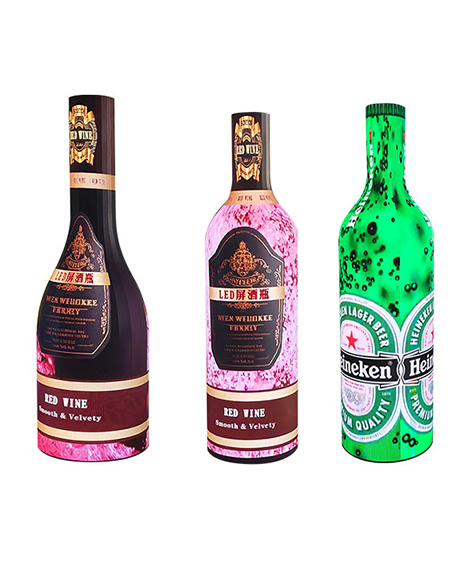
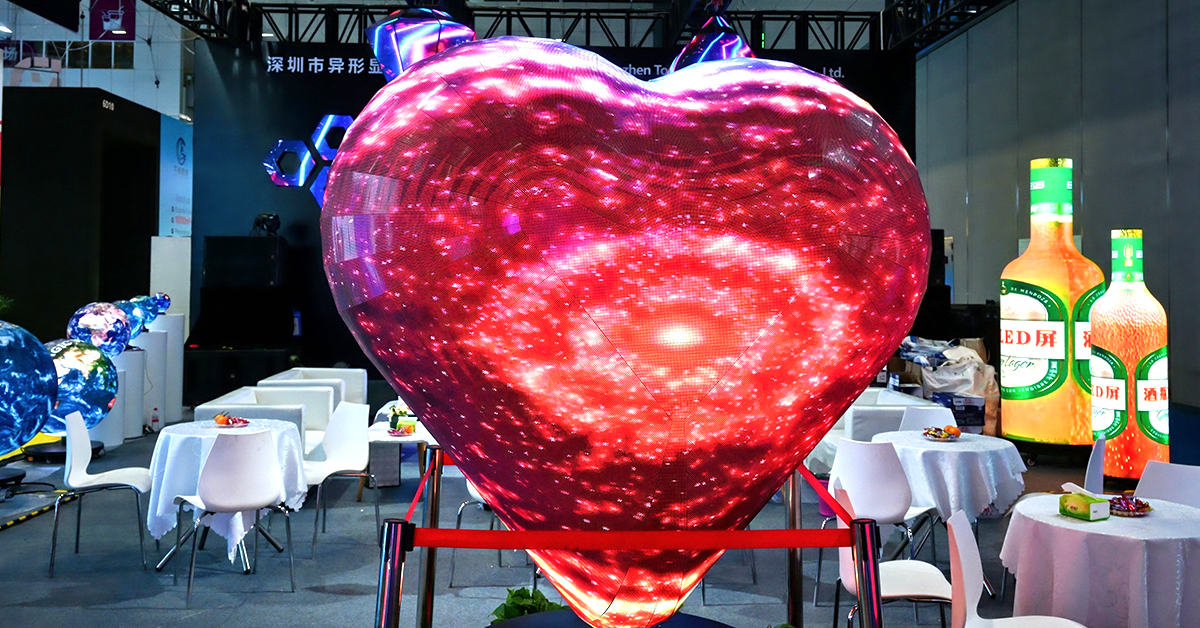
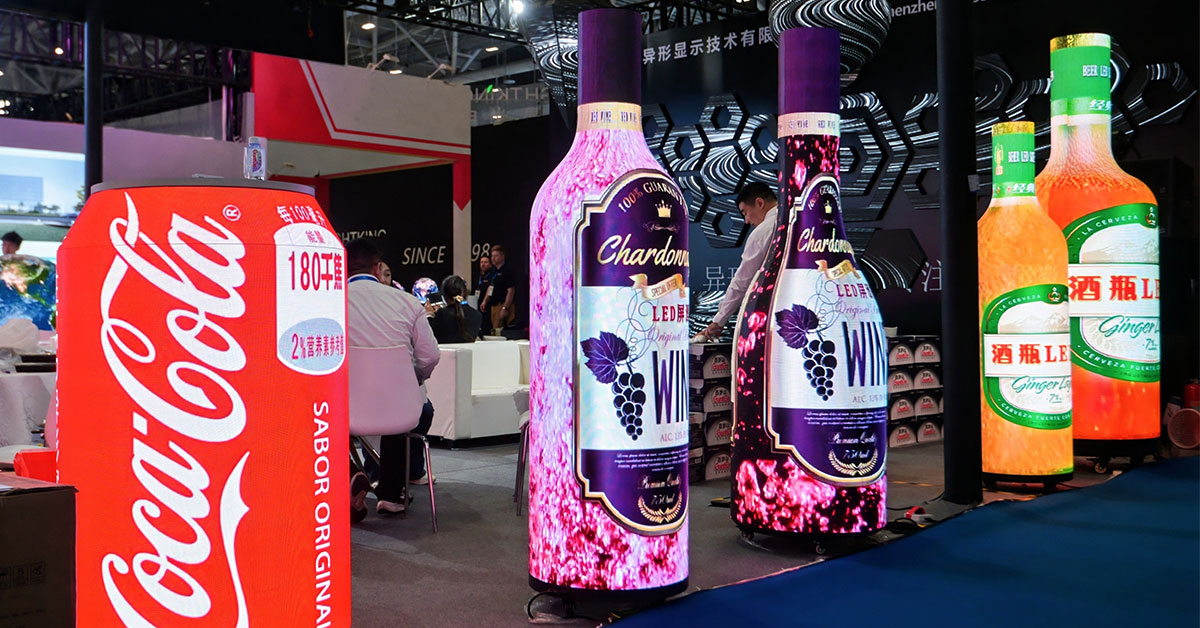
When a project requires a highly customized appearance, manufacturers can build an irregular LED display with specially designed cabinets and module layouts.
Popular sushi-themed concepts include:
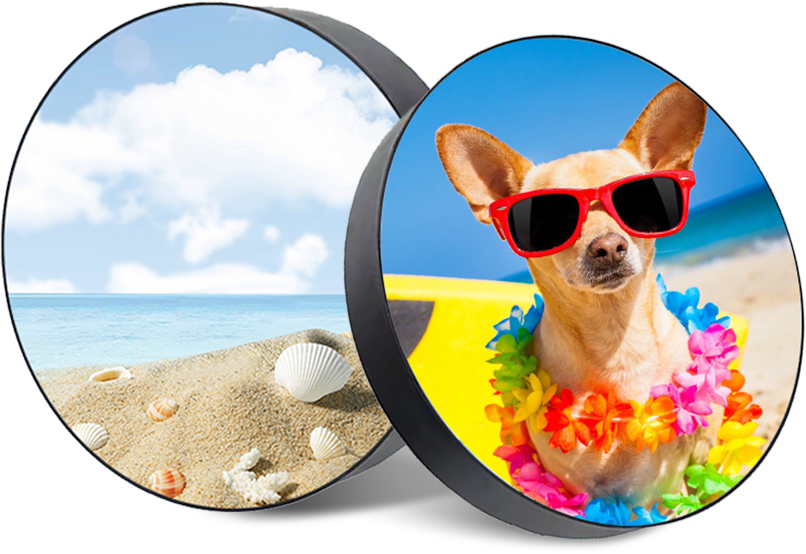
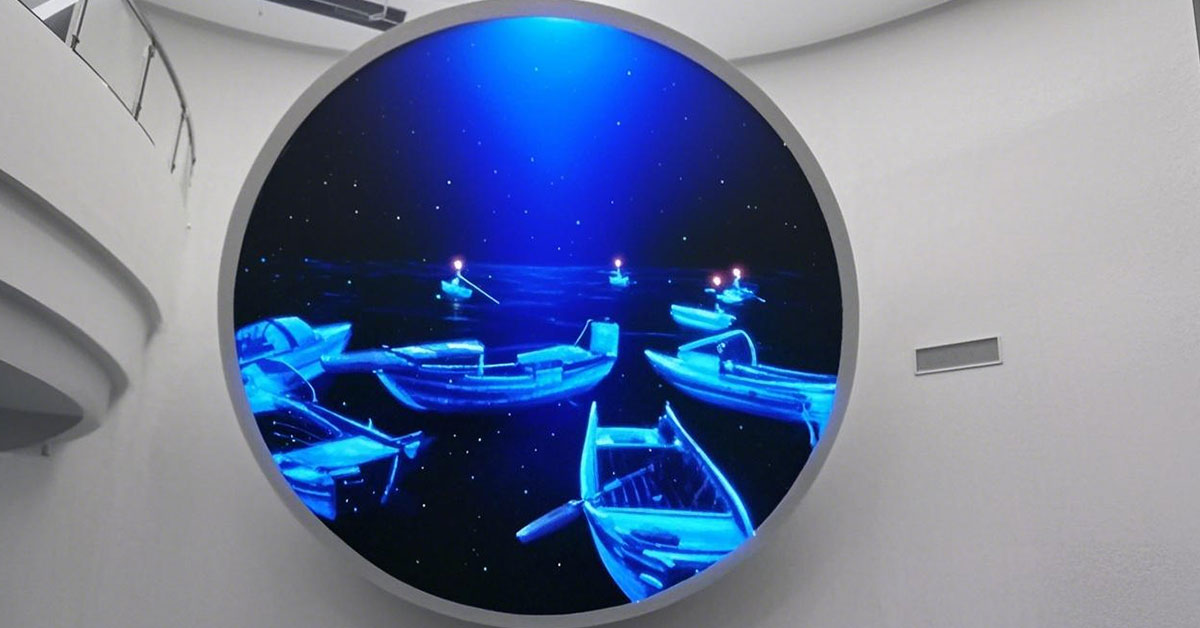
A round LED screen can imitate the cross-section of a sushi roll, highlighting ingredients such as salmon, tuna, avocado, or cucumber.
A teardrop-like profile can resemble the silhouette of certain sushi pieces while creating a distinctive storefront attraction.
Smooth curved screens replicate the flowing contours of hand-formed sushi and integrate naturally into interior architecture.
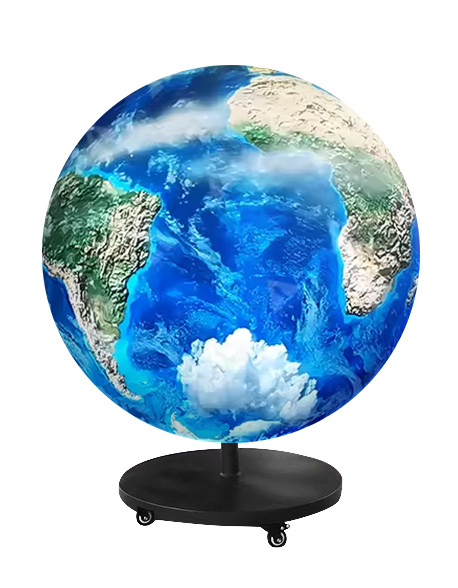
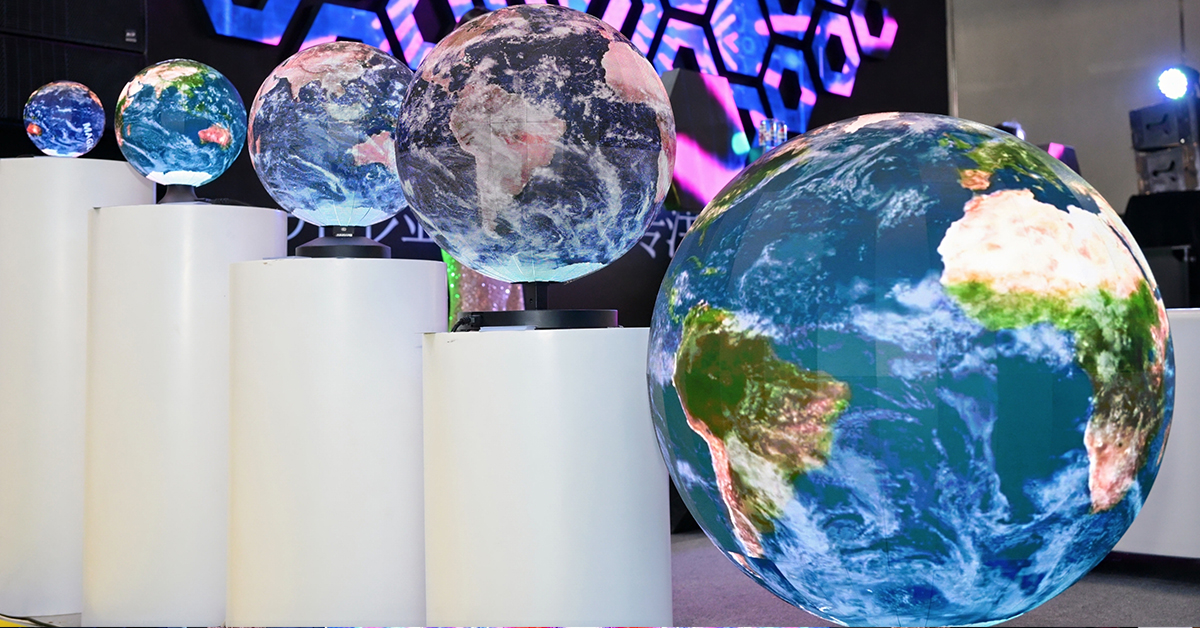
Ball-shaped structures work well for rice-inspired concepts or artistic interpretations of sushi and Japanese cuisine.
To achieve these shapes, engineers often combine customized circuit layouts with precision structural design, enabling seamless visual transitions across the display surface.
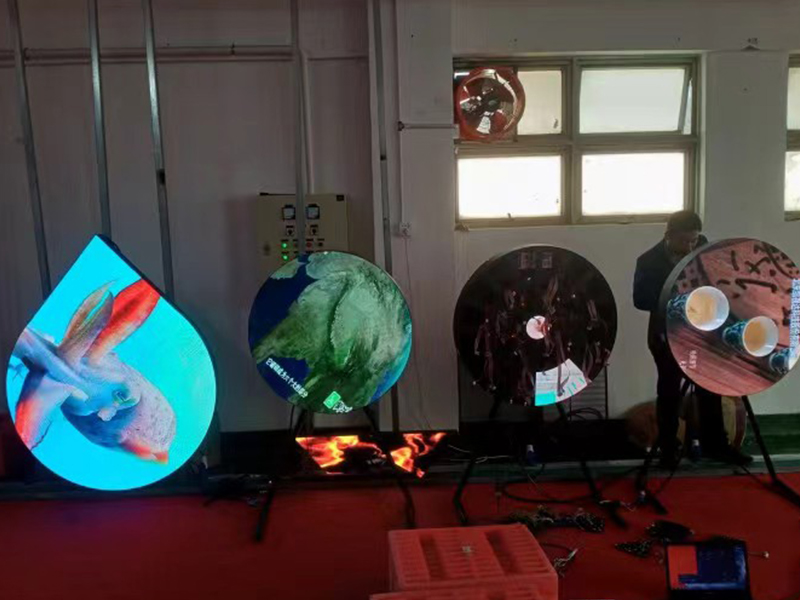
Creative shapes no longer require complicated content production.
Modern LED control platforms support advanced mapping and configuration features that allow operators to display standard rectangular videos on irregular screens with minimal manual adjustment.
Typical capabilities include:
Visual screen configuration through drag-and-drop tools.
Rotation and mapping for complex geometries.
Flexible row and column adjustments to match custom layouts.
Automatic optimization for image consistency.
Color calibration to reproduce the natural appearance of fresh ingredients.
As a result, restaurants can update promotional videos and menu animations quickly without redesigning every piece of content.
Location | Recommended Display | Purpose |
Storefront signage | Sushi outline or drop-shaped LED screen | Create a recognizable brand landmark and attract foot traffic |
Behind the sushi bar | Flexible curved LED display | Play chef demonstrations and food preparation videos |
Above refrigerated display cases | Circular LED display | Highlight ingredient freshness and featured menu items |
Interior columns | Cylindrical LED display | Present brand stories, promotions, or rotating menus in 360 degrees |
Ceiling installations | Spiral or wave-shaped flexible LED screen | Build an immersive Japanese-inspired atmosphere |
A successful sushi-shaped LED project usually follows these steps:
Determine the preferred sushi style, such as nigiri, maki rolls, gunkan maki, or other signature creations, along with installation dimensions and location.
Engineers create a 3D model and design the supporting structure, cabinet layout, and module arrangement to match the desired shape.
Production teams fabricate either flexible LED modules or specially engineered irregular modules according to the approved design.
Technicians map the display and optimize playback so that content aligns correctly with the custom geometry.
Restaurants can display sushi preparation videos, ingredient stories, seasonal promotions, chef introductions, digital menus, and branded animations.
The final step includes on-site assembly, calibration, and performance testing to ensure excellent visual quality and reliable operation.
A custom sushi-shaped LED display combines creative architecture with digital marketing. Rather than serving as a simple screen, it becomes a signature attraction that reinforces your restaurant's identity and enhances the customer experience.
By leveraging flexible LED modules, irregular display engineering, and intelligent content mapping, sushi restaurants can transform imaginative concepts into visually striking installations that capture attention both inside and outside the venue.
 +86 18688923792
  andy@tosled.com