
Industry news


View: 383

Release time:2026-06-15
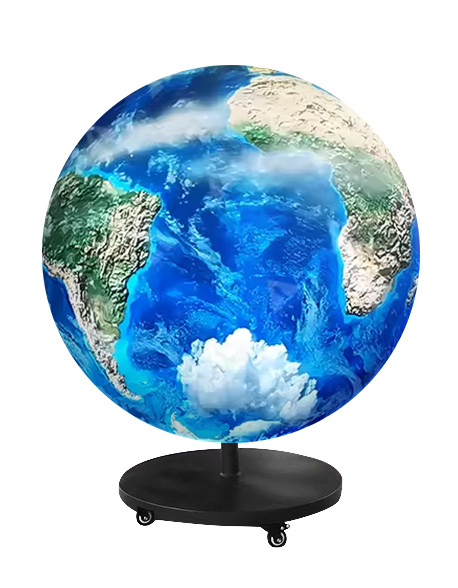
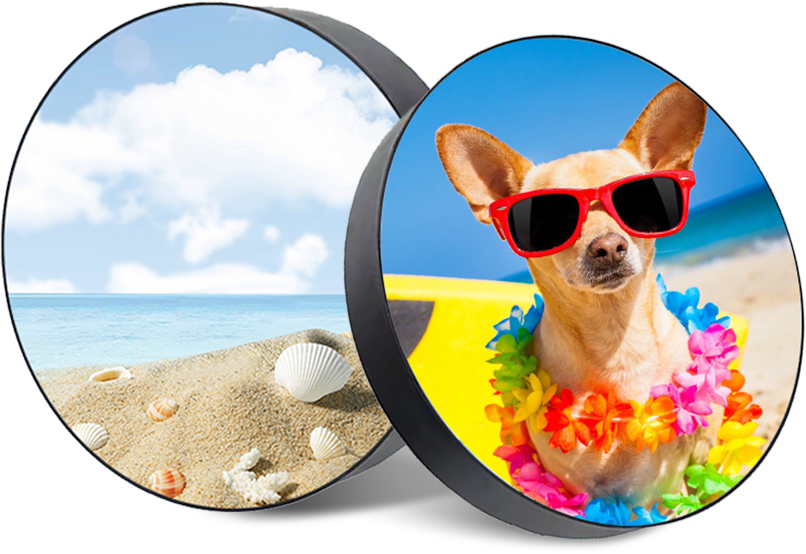
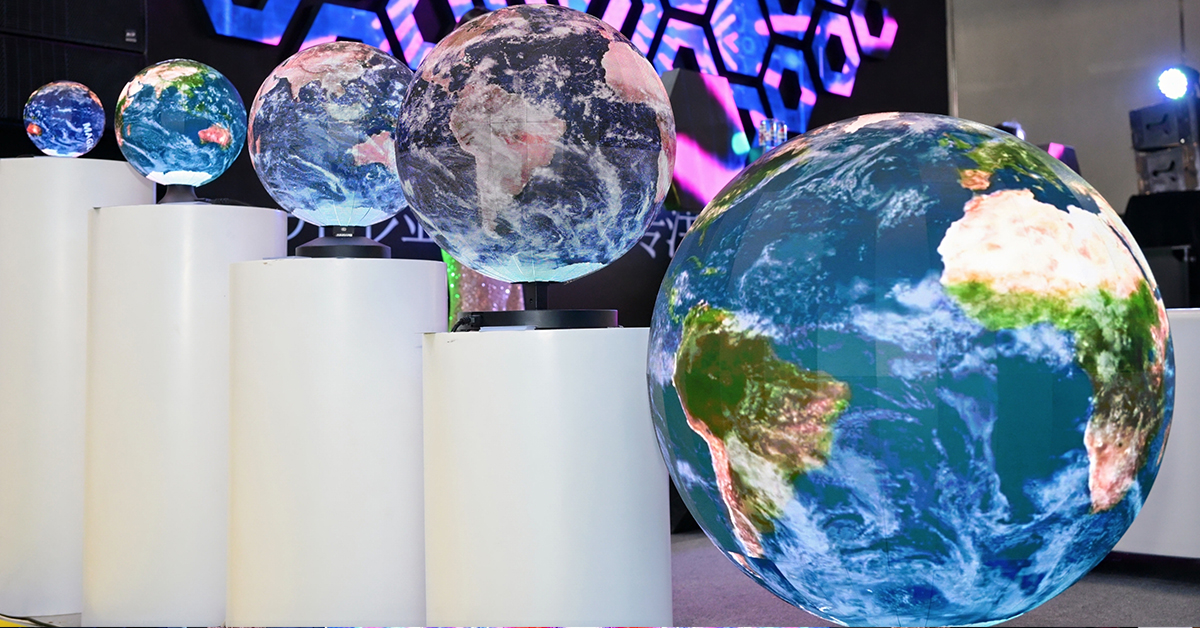
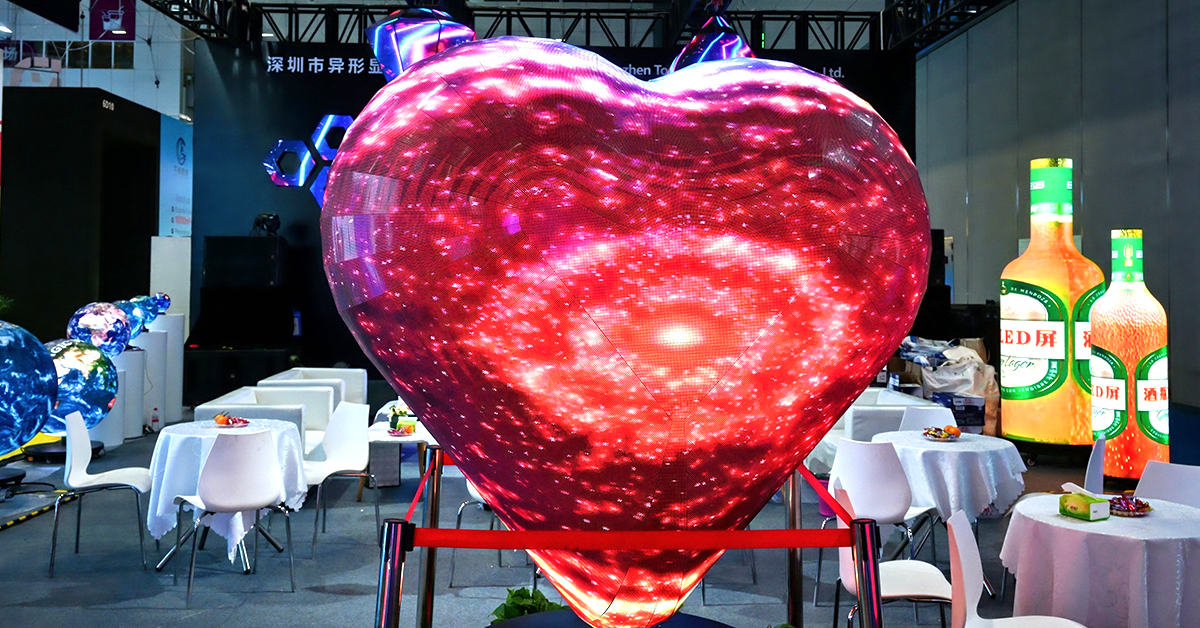
A 1-meter outdoor spherical LED display combines 360° visibility with a compact footprint, making it suitable for retail plazas, theme parks, museums, hotels, commercial streets, and promotional events. Compared with a traditional flat LED screen, it attracts attention from multiple directions and creates a stronger visual impact.
Item | Recommended Configuration |
Diameter | 1.0 m |
Installation | Floor-mounted, pedestal-mounted, or suspended (after structural verification) |
Pixel Pitch | P2.5–P4 depending on viewing distance and budget |
Brightness | 5,000–8,000 nits for outdoor daytime visibility |
Refresh Rate | ≥3,840 Hz (higher rates preferred for filming) |
Protection Rating | IP65 or above |
Viewing Angle | 360° horizontal display |
Maintenance | Front or modular maintenance design |
Operating Temperature | Approximately -20°C to +60°C |
Control System | Synchronous or asynchronous playback with remote management support |
A 1-meter sphere generally consists of:
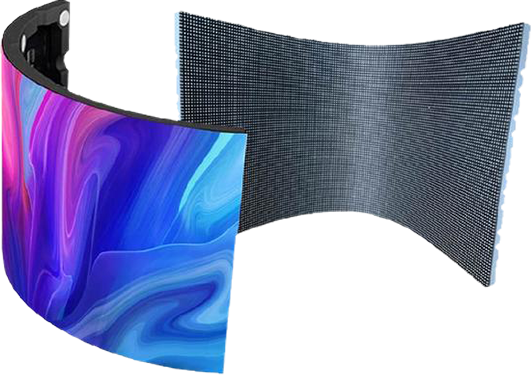
Curved or custom-shaped LED modules that form a smooth spherical surface.
Internal steel or aluminum support framework for strength and dimensional stability.
Central control cavity housing receiving cards, power supplies, and wiring.
Weather-resistant enclosure to protect electronics from rain, dust, and UV exposure.
Ventilation or thermal management system to maintain stable operating temperatures.
Suitable for shopping centers and public squares.
Fixed to a reinforced concrete foundation.
Easy to access for maintenance.
Elevates the sphere for improved visibility.
Can integrate branding or decorative elements into the base.
Common for entrances and exhibition spaces.
Appropriate for covered outdoor spaces or canopies.
Requires engineering calculations for static and dynamic loads.
Safety cables and certified suspension hardware are essential.
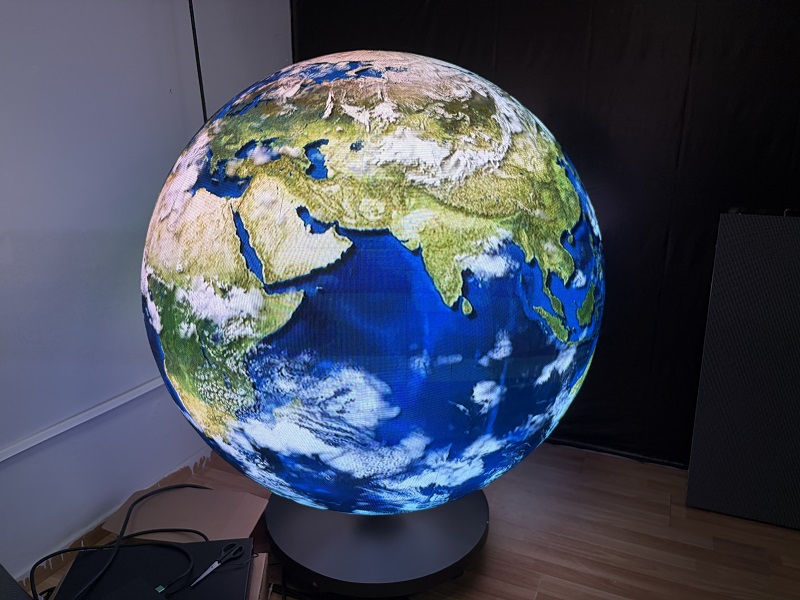
Because the display is spherical rather than flat, conventional videos often require adaptation.
Effective content includes:
Rotating Earth or planetary animations.
360° brand logos.
Dynamic product showcases.
Holiday-themed visual effects.
Interactive art installations.
Countdown timers and event promotions.
Sports and entertainment graphics.
Preparing content with spherical mapping helps avoid distortion and improves the viewing experience.
For reliable outdoor operation:
Use dedicated AC power with surge protection.
Install waterproof connectors and cabling.
Include proper grounding and lightning protection.
Connect through Ethernet, fiber, or 4G/5G remote control when required.
Consider UPS backup power for critical installations.
Clean the exterior regularly to remove dust and debris.
Inspect waterproof seals and cable glands.
Verify module alignment after severe weather.
Monitor internal temperatures and fan operation if active cooling is used.
Keep spare LED modules and power supplies available for rapid replacement.
For audiences standing close to the display, such as in retail environments or exhibitions, P2.5 generally provides a sharper image. For installations viewed mainly from farther away, P3 or P4 can offer a cost-effective balance between image quality and budget.
360° visibility that engages viewers from every direction.
Compact size suitable for locations with limited space.
Distinctive appearance that helps brands stand out.
Flexible deployment for advertising, public art, events, and wayfinding.
High brightness and weather resistance when designed for outdoor use.
For most commercial outdoor applications, a 1-meter sphere with P2.5 pixel pitch, 5,000–8,000 nits brightness, IP65 protection, and a high-refresh control system provides a practical balance of image quality, durability, and long-term reliability.
 +86 18688923792
  andy@tosled.com