



新闻中心
最真实的客户反馈,高高度信息丰富的技术支持视频和我们的最新更新!
最真实的客户反馈,高高度信息丰富的技术支持视频和我们的最新更新!

Voir: 91

Date de publication:2026-09-18
When buyers compare a COB LED display price, pixel pitch is usually the first number they check.
A P0.9 COB LED screen normally costs more than a P1.5 screen of the same size. This makes sense because a smaller pixel pitch requires more LED chips in the same display area
But pixel pitch is only one part of the quotation.
Two suppliers may both offer a P1.25 COB LED display with the same screen size and similar brightness, but their prices can still be very different. The reason is that many important differences are hidden inside the LED module, PCB, driver system, cabinet and production process.
Understanding these differences helps buyers compare quotations more accurately instead of simply choosing the lowest price.
A quotation normally shows easy-to-compare specifications such as:
Pixel pitch
Screen dimensions
Resolution
Brightness
Refresh rate
Cabinet size
These numbers are important, but they do not describe the complete construction of the screen.
A P1.25 COB screen using a basic chip structure and standard PCB is not necessarily equal to another P1.25 screen using full flip-chip technology, a more precise PCB, a different driver system and stricter factory calibration.
This is why COB LED screen price comparison should go beyond pixel pitch.
One important difference is the chip packaging structure.
COB means that LED chips are directly mounted and packaged on the PCB instead of being made into individual SMD lamps first.
However, not every COB LED display uses exactly the same chip structure.

For example, there are face-up COB and full flip-chip COB solutions.
A full flip-chip structure removes traditional wire bonding between the chip and PCB. This can improve the electrical and thermal path while also supporting a more compact LED structure.
The equipment, chip selection and manufacturing control required for different COB structures are not the same.
Therefore:
P1.25 COB does not automatically mean the same product grade.
When comparing prices, ask the supplier what COB structure is actually being used.
This is one of the most overlooked price factors.
Imagine two factories each producing 100 COB LED modules.
If one production line produces 98 modules that pass inspection while another produces only 90, the second factory must spend more time on screening, repair and rework.
Those costs do not disappear. They eventually become part of the cost of the qualified modules.
Fine-pitch COB production requires accurate die bonding, packaging and testing. Small defects can become more noticeable when thousands or millions of pixels are installed on one video wall.
A low quotation may therefore come from lower material specifications, but it may also come from different production control and acceptance standards.
The PCB is especially important in a fine pitch COB LED display because the LED chips are mounted directly onto it.
PCB differences may include:
Number of layers
Circuit density
Copper design
Routing accuracy
Thermal performance
Board flatness
As pixel density increases, the space available for electrical routing becomes smaller.
A more complex multilayer or high-density PCB can cost more, but it may also help achieve stable electrical performance and accurate chip positioning.
This means buyers should not compare two COB modules only by looking at their P value.
Another hidden difference is the driver system.
The driver IC controls how the LEDs receive current and how accurately brightness and grayscale are reproduced.
Different driver solutions can affect:
Refresh rate
Low-gray performance
Brightness consistency
Power consumption
Camera performance
Image stability
Some COB LED screens also use a common-cathode power design to improve energy efficiency.
Two screens may both advertise a 3840Hz or 7680Hz refresh rate, but their low-brightness grayscale and power performance may still be different.
For control rooms, studios and conference rooms, these differences can be more important than a small difference in the initial purchase price.
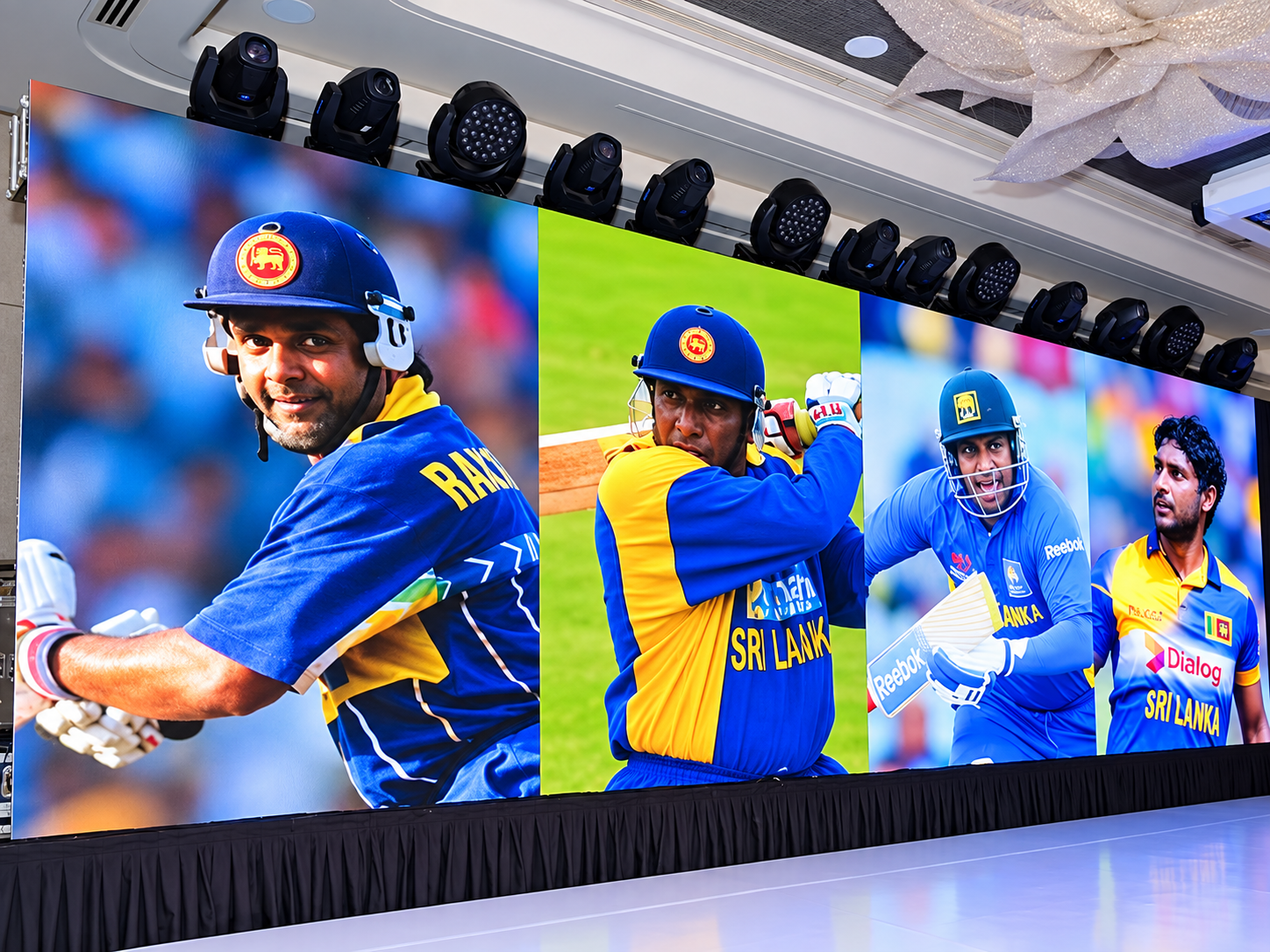
One advantage of COB technology is that the LED chips can be covered by an integrated protective surface.
But the quality of this surface treatment varies.
The encapsulation process can influence:
Black level
Contrast
Light reflection
Color appearance
Anti-collision protection
Moisture and dust resistance
A darker and more uniform surface can improve perceived contrast, especially when the screen displays dark content.
Therefore, two P1.2 displays with similar brightness may still look noticeably different in the same room.
When comparing the COB LED display cost, viewing the real screen under the same lighting conditions is often more useful than comparing specification sheets alone.
After production, COB LED modules still need testing and calibration.
Basic calibration may only correct obvious brightness and color differences.
A stricter process may require closer control of:
Brightness uniformity
Color consistency
Low-gray uniformity
Module-to-module differences
White balance
This requires additional testing time and may also require more modules to be screened before shipment.
For a small meeting-room display, minor variation may not be obvious.
For a large command center or broadcast background, however, small differences between modules can become visible across the complete video wall.
The cheapest quotation may simply use a different acceptance standard.
COB modules are usually installed on precision cabinets.
For a fine-pitch display, even a very small cabinet alignment error can create visible seams, shadows or uneven reflections.
Cabinet cost can be affected by:
Die-cast aluminum precision
CNC machining
Flatness tolerance
Alignment systems
Connector design
Front-maintenance structure
A high-precision cabinet is not only about appearance. It helps keep thousands of pixels on the same visual plane after installation.
For permanent indoor video walls, this can reduce adjustment work during installation and future maintenance.
The initial COB LED screen price is not the complete project cost.
Buyers should also consider how the display will be serviced.
For example, a front-service design allows technicians to remove modules, receiving cards or power supplies without building a large maintenance space behind the screen.
Spare modules are another consideration.
Ask whether the quotation includes:
Spare COB modules
Spare power supplies
Receiving cards
Calibration data
Repair support
Warranty service
A slightly higher initial quotation may result in easier maintenance during several years of operation.
If two suppliers offer the same pixel pitch, do not stop at the P value.
Compare the COB architecture, PCB design, driver IC, power system, surface treatment, calibration standard, cabinet tolerance and maintenance method.
It is also useful to test actual samples.
Display dark gray images, skin tones, gradients, moving video and solid colors. Check the screen from both the front and side.
A normal promotional video can hide small uniformity problems. Test patterns usually reveal them much faster.
COB LED displays are especially suitable for applications where viewers stay relatively close to the screen, including:
Control rooms
Conference rooms
Broadcast studios
Exhibition halls
Corporate showrooms
Premium retail spaces
For these projects, image consistency, reliability and long-term maintenance are often just as important as resolution.
No. Pixel pitch is important, but chip structure, PCB design, driver IC, cabinet precision, calibration and production yield can also create a large price difference.
They may use different chip structures, PCBs, driver systems, surface treatments, cabinets or quality-control standards even though the pixel pitch is identical.
It can require different chips, equipment and manufacturing processes, so the production cost may differ from other COB structures. Buyers should compare the complete configuration rather than the COB name alone.
Price should be compared together with performance, manufacturing quality, spare parts and maintenance support. Ask suppliers to provide detailed specifications and test the actual display when possible.
A good COB LED display quotation should explain more than screen size and pixel pitch.
At Toosen, COB LED display solutions can be configured according to viewing distance, required resolution, installation environment and project requirements. Full flip-chip COB, fine-pitch configurations, front-maintenance structures and different cabinet solutions are available for professional indoor applications.
Before requesting a quotation, provide the required screen dimensions, viewing distance, application, installation method and expected resolution. This allows the LED display configuration to be selected around the actual project instead of choosing a product based only on pixel pitch.
For more product information, visit the Toosen COB LED Display range.
 +86 18688923792
  andy@tosled.com


