
Industry news


View: 376

Release time:2026-03-27
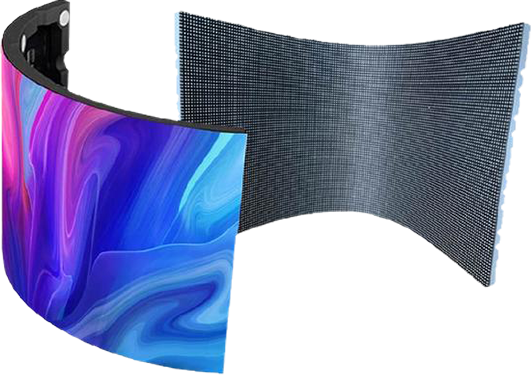
Flexible LED displays designed for architectural integration demand a fundamentally different execution strategy. Unlike conventional LED screen projects, you can’t treat them as add-on equipment. Instead, you must approach them as part of the building itself—structurally, visually, and functionally.
To achieve seamless integration, project teams need a dedicated workflow that aligns design, engineering, and content from the very beginning.
The most effective projects start early—ideally during the architectural concept phase.
At this stage, the LED display is no longer an afterthought. Designers integrate key parameters such as screen dimensions, load-bearing requirements, cable routing, and thermal management directly into the building plans. This proactive approach eliminates the need for disruptive retrofits like cutting walls or rerouting infrastructure later.
Just as importantly, teams must define the display’s structural role early on:
Fully embedded design: The screen sits flush with the wall, becoming part of the façade
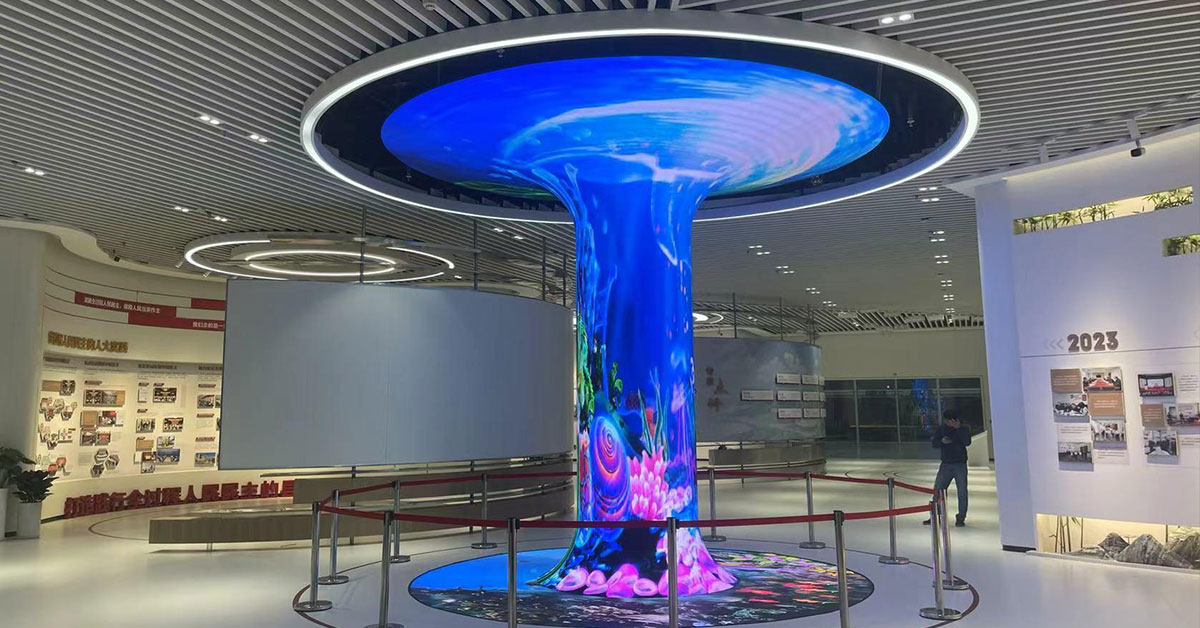
Independent structure: The screen acts as a standalone element, such as a digital column or sculptural feature
This decision affects everything—from structural engineering to visual impact—so teams should lock it in as early as possible.
Once the concept is set, engineers must ensure the system performs safely and reliably over time.
Large-scale installations—especially column arrays—require dedicated steel support structures. These bases must connect securely to the main building framework.
Engineers should provide detailed structural calculations during the design phase to verify:
Load distribution
Wind and vibration resistance
Seismic stability (where applicable)
Skipping this step introduces serious safety risks, particularly in high-traffic commercial environments.
Thermal management becomes more complex with integrated designs, especially cylindrical or enclosed forms.
Because these shapes limit natural heat dispersion, designers often adopt a chimney-effect airflow system:
Cool air enters from the bottom
गर्म air exits through the top
Airflow channels remain hidden within ceilings and flooring systems
This approach maintains both efficiency and visual cleanliness. It also prevents overheating without compromising the architectural aesthetic.
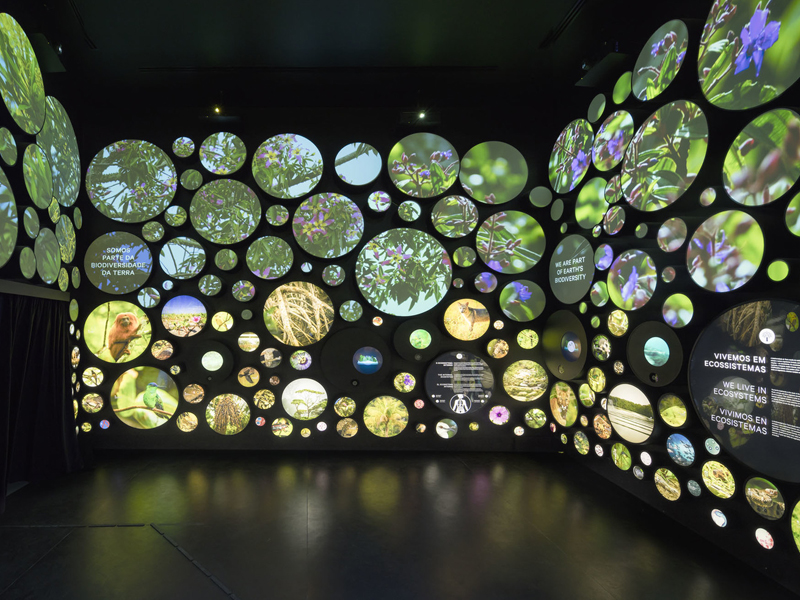
Maintenance presents one of the biggest challenges in integrated LED systems. Since the display blends into the architecture, traditional rear-access servicing often isn’t feasible.
Smart designs solve this by making maintenance pathways “invisible but available.”
Top access: Technicians remove modules through concealed ceiling access panels
Bottom access: Designers integrate openable baseboard (kickplate) structures for wiring and power maintenance
Front serviceability: Modules support front emoval, eliminating the need for rear clearance
By combining these methods, teams ensure long-term serviceability without disrupting the overall design.
Even with perfect hardware integration, the final result depends heavily on content.
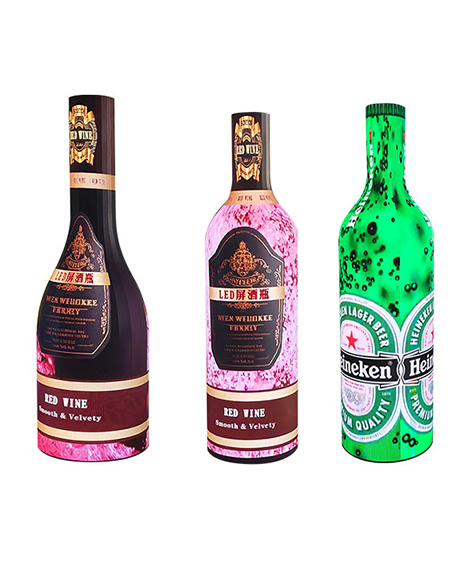
Unlike flat screens, cylindrical or irregular LED displays require specialized content production workflows. Standard video formats won’t translate well onto curved surfaces.
That’s why teams should define content strategies during the design phase—not after installation.
Use cylindrical mapping techniques to adapt visuals to curved surfaces
Develop custom content templates tailored to the display geometry
Align content resolution and aspect ratios with the physical structure
Without this preparation, projects often face a common issue: the screen looks impressive, but there’s no suitable content to display.
Architectural LED integration is not just a technical upgrade—it’s a shift in project logic.
Teams must think holistically. They need to align architecture, structure, thermal systems, maintenance planning, and content creation into a single coordinated workflow.
When executed correctly, flexible LED displays don’t just decorate a building—they become part of its identity.
 +86 18688923792
  andy@tosled.com