


Industry news


View: 579

Release time:2026-03-27
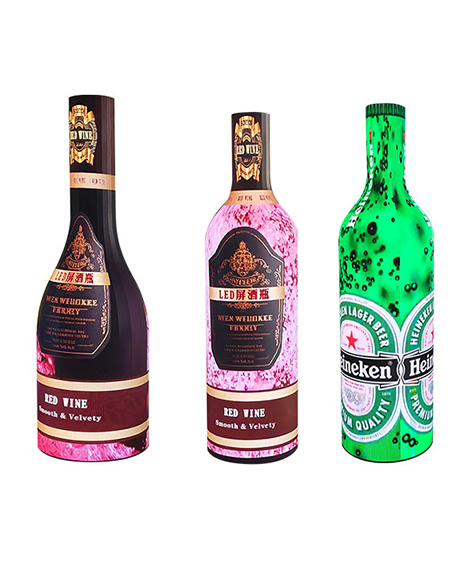
As commercial spaces evolve, designers no longer treat LED displays as standalone media surfaces. Instead, they integrate them directly into architecture. Among emerging solutions, can-shaped LED displays stand out. They don’t just decorate a space—they redefine how structure, media, and branding interact.
So how do these displays achieve true architectural integration? Let’s break it down.
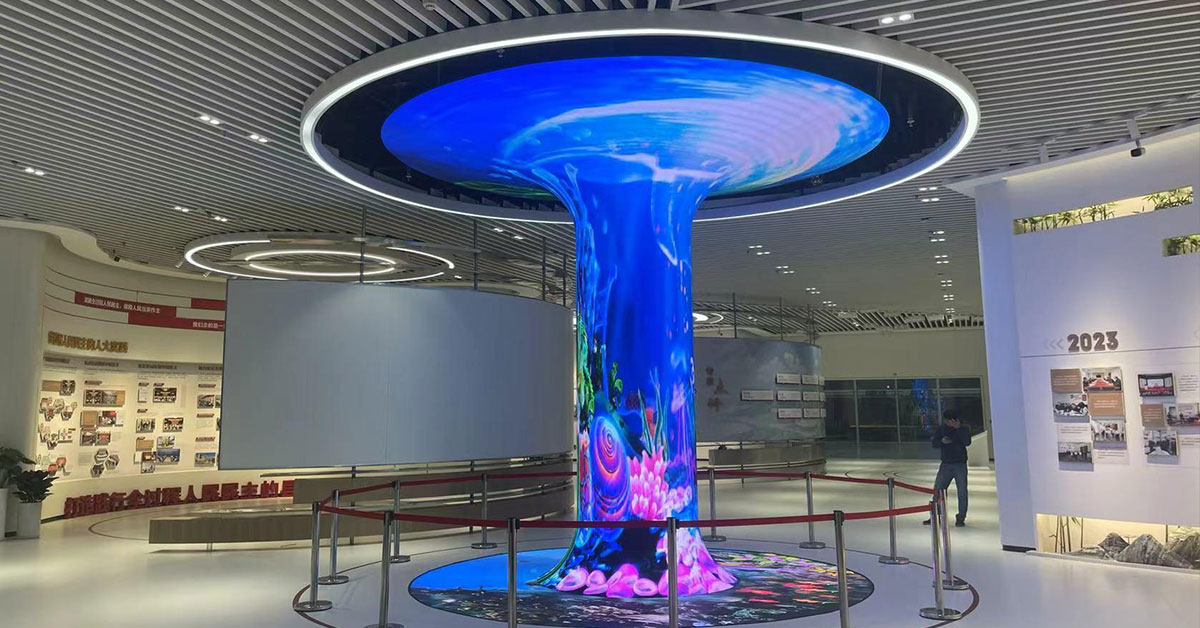
In many shopping malls, exhibition halls, and hotel lobbies, structural columns present a persistent design challenge. Since these load-bearing elements cannot be removed, designers traditionally wrap them with marble, mirrors, or decorative panels. While functional, those materials rarely add dynamic value.
Can-shaped LED displays offer a more strategic solution.
Instead of hiding the column, designers can use the display as a digital façade. The column becomes a high-impact visual centerpiece rather than a passive structural element. As a result, spaces gain both aesthetic appeal and media functionality without altering the building’s core structure.
Even more importantly, brands can use these “digital columns” to deliver immersive content, advertisements, or interactive visuals—turning previously ignored areas into high-value touchpoints.
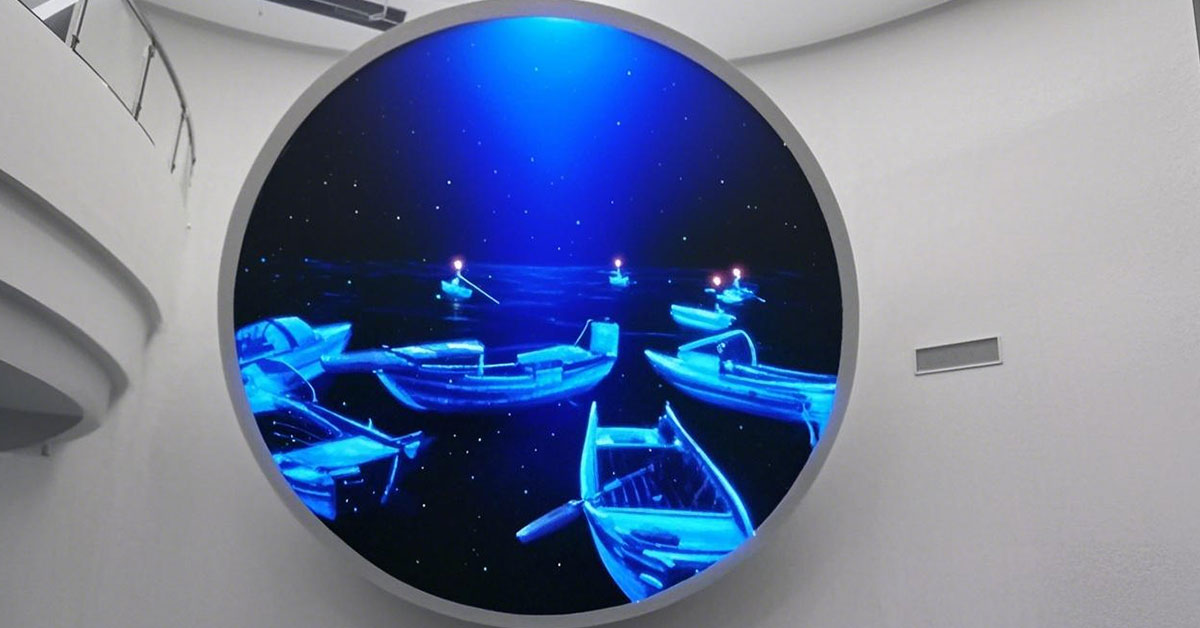
Beyond retrofitting existing structures, can-shaped LED displays also help create entirely new spatial layouts.
In temporary or semi-permanent environments—such as product launches, pop-up stores, and exhibitions—designers often need flexible partitioning solutions. Traditional walls limit visibility and reduce engagement. In contrast, arrays of can-shaped LED displays can form “screen column clusters.”
These columns serve two purposes at once:
They define and divide space
They function as dynamic information carriers
This dual functionality allows designers to build open, fluid environments without sacrificing structure or storytelling. In other words, one installation replaces both walls and media systems.
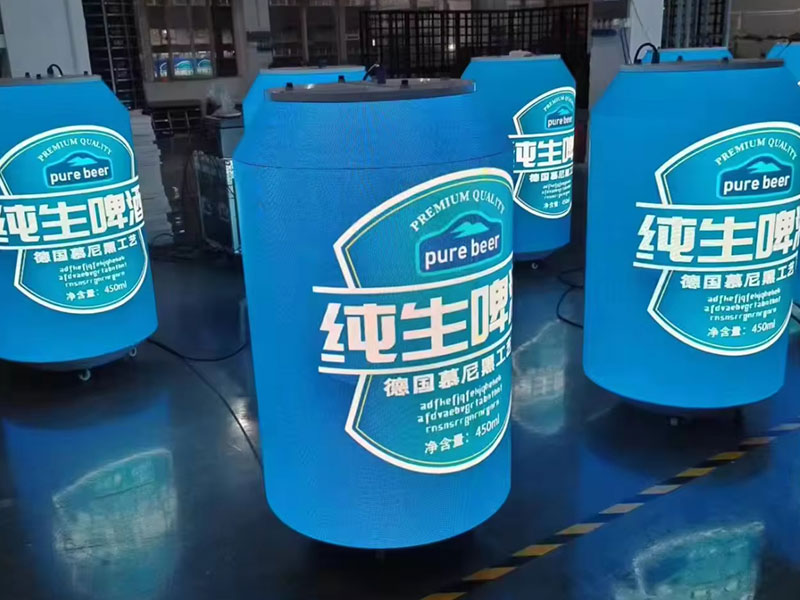
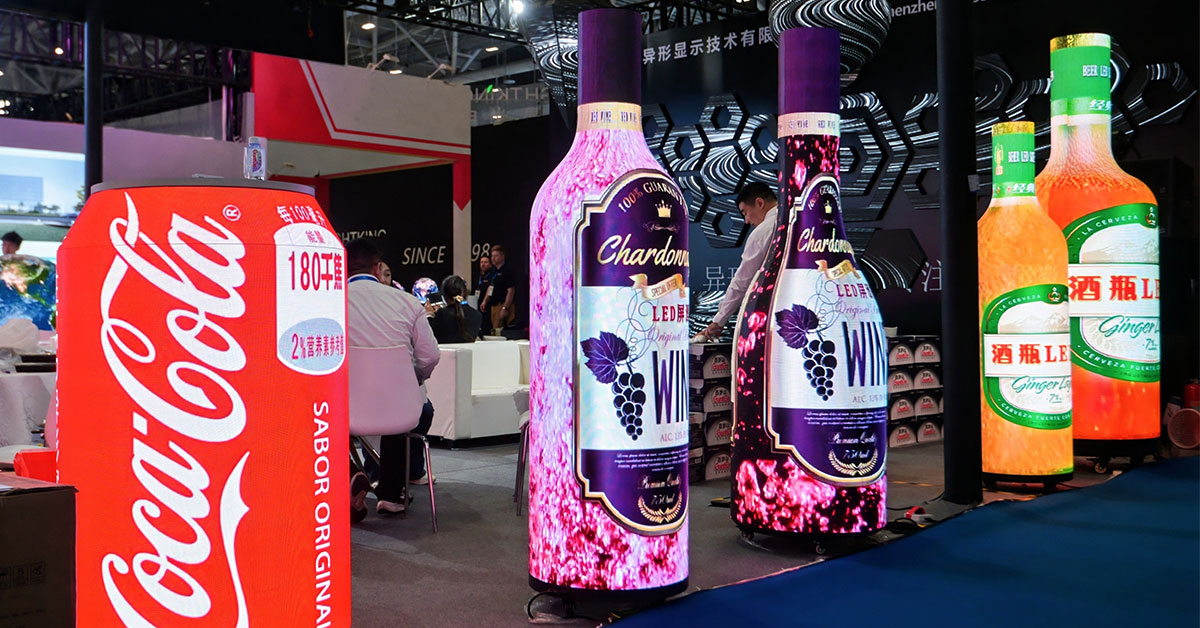
A single can-shaped LED display typically has a diameter of only a few dozen centimeters. On its own, it works as a feature piece. However, to match architectural scale, designers rely on modular composition.
They assemble multiple units—sometimes hundreds—into larger configurations such as:
Column arrays
LED walls
Immersive “screen forests”
This approach works much like stacking building blocks. Each unit acts as a pixel in a larger spatial canvas.
However, modular design introduces a critical technical challenge: seam alignment.
If gaps between adjacent units are inconsistent or visually noticeable, the entire installation loses cohesion. The illusion of a unified architectural surface breaks down.
To solve this, manufacturers must focus on:
High-precision connection structures
Custom mounting systems tailored to each project
Accurate on-site positioning and calibration
Only with tight seam control can multiple columns read as one continuous visual system.
To achieve true integration, hardware performance must match design ambition. Toosen addresses this with its P1.8 can-shaped LED display, engineered for both visual quality and structural adaptability.
Key advantages include:
Lightweight construction, which simplifies installation and reduces structural load
Seamless splicing, ensuring smooth transitions between modular units
High refresh rate (7680Hz), which eliminates flicker and enhances visual comfort
Brightness up to 4000 cd/m², maintaining clear visibility even in high ambient light environments
Because of these features, the display performs reliably in demanding indoor settings such as malls, atriums, and exhibition spaces.
Ultimately, can-shaped LED displays represent a shift in architectural thinking. Designers no longer treat media as an afterthought. Instead, they embed it directly into the spatial framework.
By transforming columns into content platforms, enabling flexible layouts, and scaling through modular systems, these displays blur the line between structure and storytelling.
For brands and architects alike, that shift unlocks new possibilities. Spaces no longer just exist—they communicate, adapt, and engage in real time.
And that is what true architectural integration looks like.
 +86 18688923792
  andy@tosled.com