


Industry news


View: 396

Release time:2026-06-08
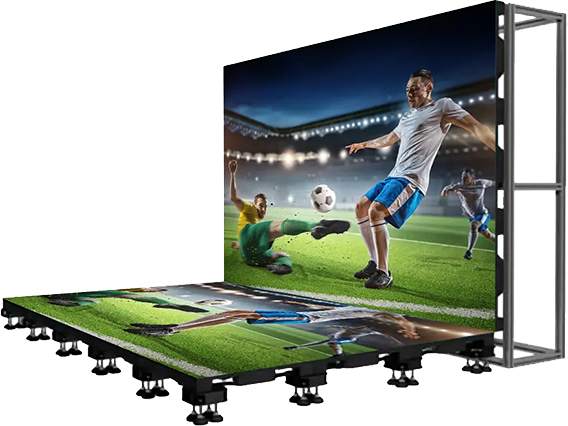
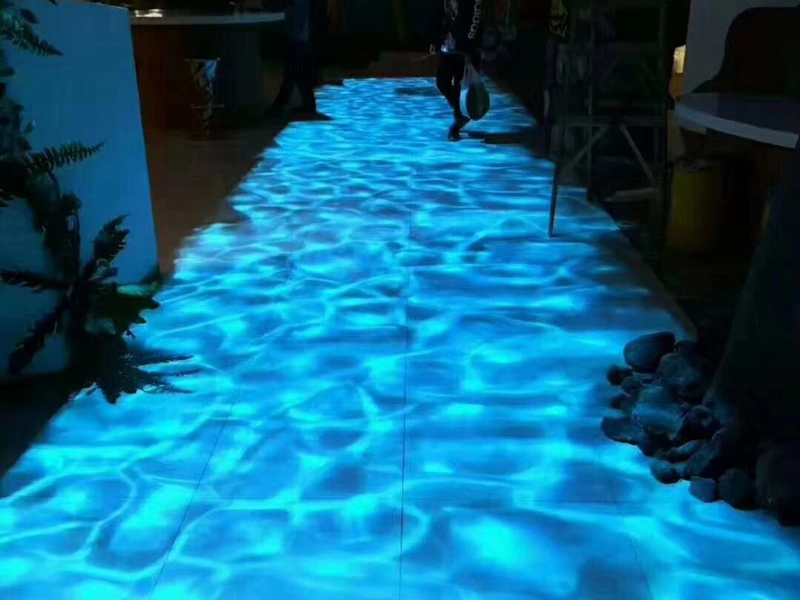
Unlike standard display products, LED floor screens are not sold as a single unit. Instead, the total project cost consists of four major components: the LED display itself, the interactive sensing system, the control equipment, and the supporting installation structure.
For children's entertainment centers, indoor playgrounds, and family entertainment venues, these elements work together to determine the final investment.
The display panel is typically the largest cost component.
Several factors influence pricing:
Because children interact with the screen at close range, venues usually choose fine-pitch models such as P2.5, P2.9, or P3.91.
A smaller pixel pitch delivers sharper image quality and smoother animations. However, higher resolution also increases the overall cost.
Most children's venues use high-strength die-cast aluminum cabinets combined with durable polycarbonate (PC) protective covers. These covers provide excellent load-bearing capacity, slip resistance, and wear protection, ensuring the screen can withstand constant running, jumping, and heavy foot traffic.
The sensing system transforms a standard floor display into an interactive experience.
Two common solutions are available:
In this configuration, each LED module contains integrated sensing technology. The system detects exactly where a child steps and immediately triggers the corresponding visual effect.
This solution offers the highest level of accuracy and responsiveness, although it typically comes with a higher hardware cost.
Alternatively, operators can install laser radar or motion-tracking sensors around the play area. These sensors detect player movement and send position data to the control computer.
While this approach reduces display hardware costs, it may struggle with crowded environments or edge detection compared to built-in sensor systems.
Reliable control equipment ensures smooth playback and real-time interaction.
Key components include:
Sending and receiving cards for video signal transmission
A high-performance control computer or media server
Dedicated interactive software and game content
Because interactive floor screens often run real-time animations and 3D effects, the control computer usually requires a powerful graphics card, such as an RTX 4060 or higher.
Many suppliers include basic interactive games—such as Fruit Slice, Piano Floor, or Color Challenge—in the package. However, custom-developed games generally require additional development fees.
The final portion of the budget covers installation and project support.
This typically includes:
Power distribution cabinets and electrical wiring
Steel support structures or adjustable mounting frames
Transportation, on-site installation, and system commissioning
Since LED floor screens must remain perfectly level for both safety and performance, a properly engineered support structure is essential.
The cost of an interactive LED floor screen extends far beyond the display itself. The final budget depends on the display resolution, sensing technology, control hardware, software requirements, and installation complexity.
For children's entertainment centers, investing in a durable, responsive, and professionally installed system often delivers greater long-term value by creating a highly engaging attraction that enhances visitor experience and increases repeat visits.
 +86 18688923792
  andy@tosled.com