Why Viewing Angle Matters for an LED Ball Display
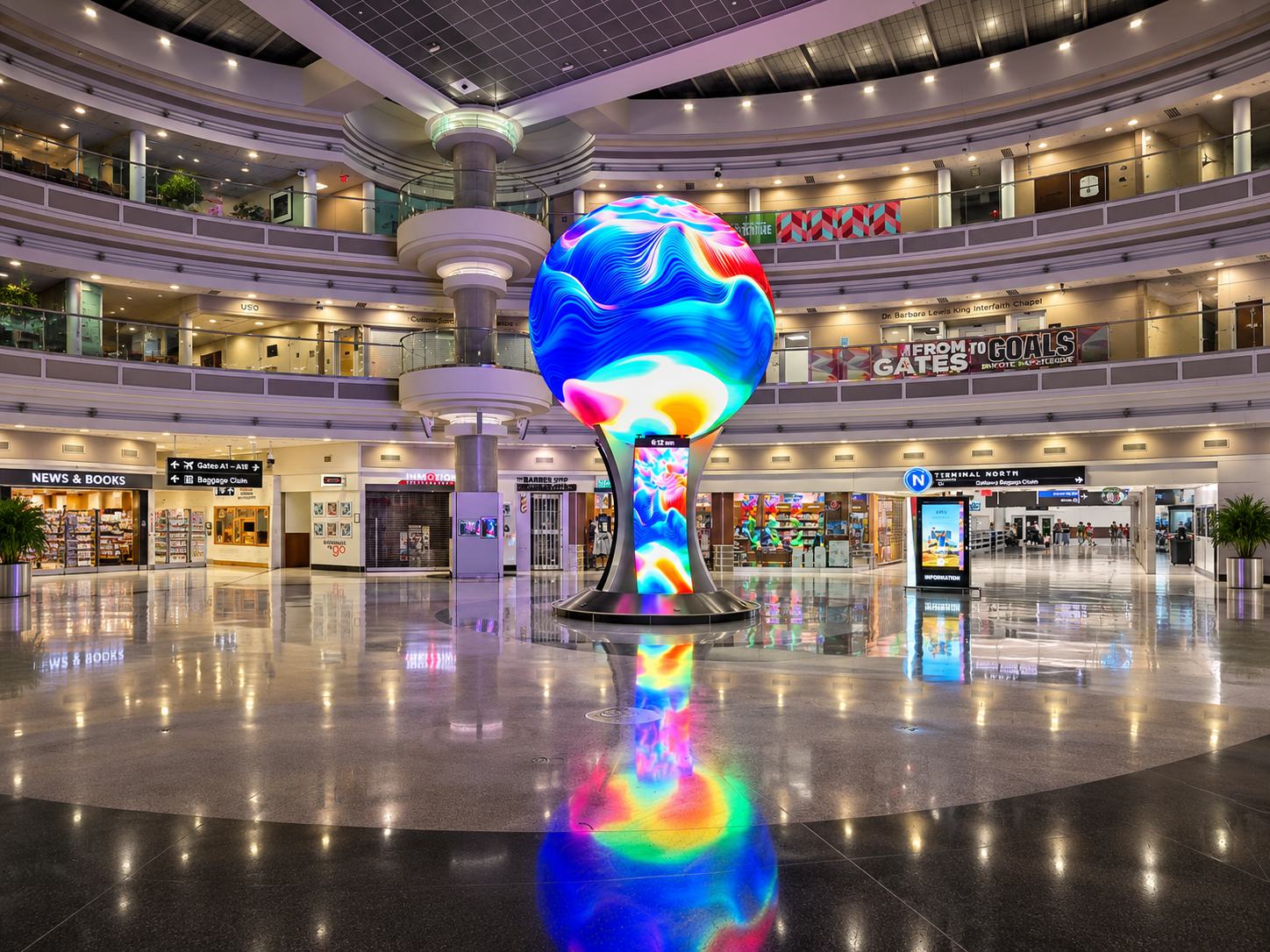
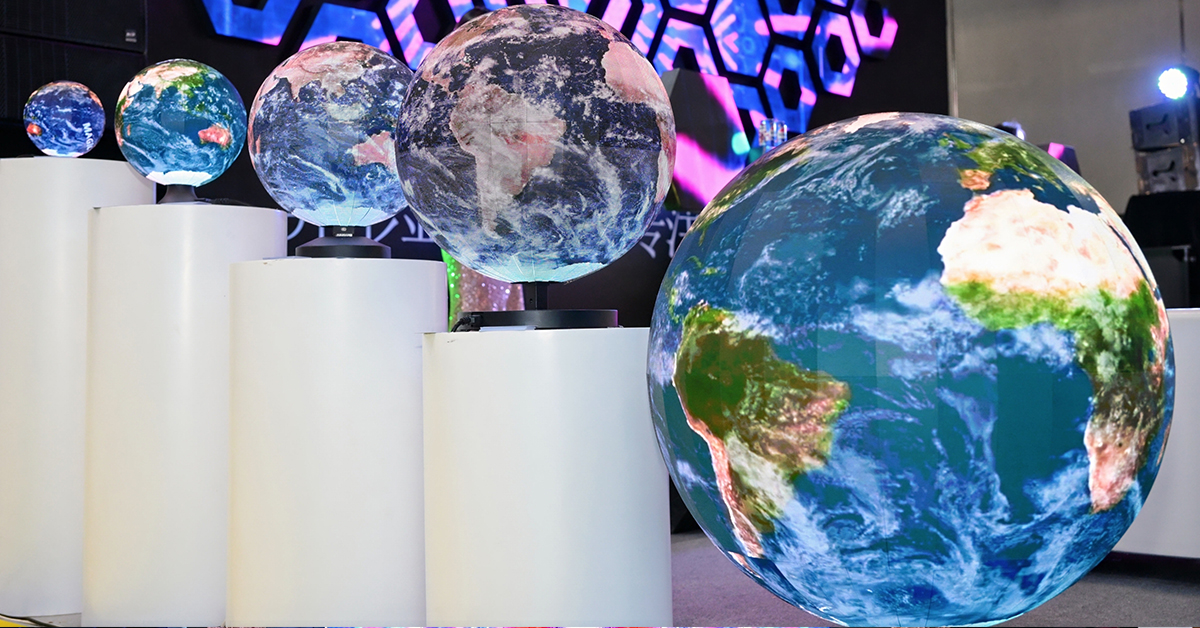
An LED ball display is designed to attract attention from multiple directions. Unlike a flat LED screen, its curved surface allows people to view images and videos from different positions around the sphere.
However, a wide viewing angle specification does not always mean that the picture looks the same from every position.
When viewers move away from the front-facing area, they may notice lower brightness, weaker color saturation, or changes in white balance. These differences can become more obvious on large spherical LED displays installed in shopping malls, exhibition halls, and public spaces.
For buyers, checking the LED ball display viewing angle is an important step before confirming a project.
2. What Happens When Brightness and Color Change?
Off-axis viewing problems can affect the overall visual experience in several ways.
Brightness loss: The screen may look bright from the front but darker from the side.
Color shift: White may appear slightly blue, yellow, or gray at different viewing positions.
Uneven images: Some areas of the sphere may look less vivid than others.
Reduced content clarity: Fine details and color transitions may become harder to recognize.
These problems are particularly noticeable when the display shows white backgrounds, product images, gradients, or colorful advertising content.
For a commercial installation, the viewing experience should be considered from the positions where visitors actually stand, not only from directly in front of the screen.
3. Why Does an LED Ball Display Have Different Viewing Performance?
Several factors influence off-axis brightness and color performance.
LED Lamp Characteristics
Different LED packages have different light-emitting properties. The viewing angle of the LED lamp affects how much light reaches the viewer at different positions.
Curved Module Structure
A spherical LED display uses specially designed flexible modules or curved PCB structures. Because each section follows the spherical surface, the LEDs do not all face the same direction.
As a result, a viewer looking at one side of the sphere may see some LEDs directly and others at an angle.
LED Mask and Surface Design
The structure around each LED can affect light distribution. An unsuitable mask design may block part of the emitted light when viewed from certain directions.
Brightness and Color Calibration
Incorrect brightness settings or inconsistent RGB calibration can make differences between viewing positions more noticeable.
4. How Buyers Can Improve Viewing Angle Performance
Before purchasing an LED ball display, buyers should check more than the advertised horizontal and vertical viewing angles.
First, confirm the LED encapsulation type and its viewing angle specifications. Different pixel pitches and LED packages may have different optical characteristics.
Second, ask the manufacturer to provide a sample module or a demonstration video showing the screen from several directions.
Third, check the brightness and color consistency of the entire spherical surface. Proper RGB calibration helps reduce visible differences between modules.
Finally, consider the installation environment. A sphere suspended in an open shopping mall has different viewing requirements from a smaller ball display placed inside a retail store.
The best configuration should match the actual viewing distance, ambient light, installation height, and audience positions.
5. How to Test Off-Axis Brightness and Color Shift
A practical viewing angle test should use the same screen settings and controlled measurement conditions.
Step 1: Prepare Test Patterns
Display full-screen white, red, green, blue, and 50% gray images. These patterns help identify brightness loss and color changes.
Step 2: Select Viewing Positions
Set a reference position directly facing a selected screen area. Then measure the same area at 30°, 45°, and 60° off-axis positions.
For a spherical screen, repeat the measurements at several locations around the sphere, including the upper, lower, and side sections.
Step 3: Measure Brightness
Use a calibrated luminance meter to record brightness at each position. Keep the measurement distance, screen settings, and surrounding lighting conditions consistent.
Calculate brightness retention using:
Brightness Retention (%) = Off-Axis Brightness / Reference Brightness × 100%
For example, if the reference brightness is 800 cd/m² and the measured brightness is 640 cd/m², the brightness retention is 80%.
Step 4: Check Color Difference
Use a colorimeter or spectroradiometer to compare RGB and white output at different positions. Record color differences using ΔE values when suitable equipment is available.
Step 5: Review the Results
Compare the measurements and identify positions with significant brightness loss or color deviation. Buyers should agree on acceptable limits with the manufacturer before production.
6. Which Product Components Should Buyers Check?
Several components directly affect the optical performance of a spherical LED display:
LED lamps: Check encapsulation type, brightness consistency, and viewing angle.
Flexible LED modules: Confirm that the modules fit the spherical structure accurately.
Driving ICs: Check grayscale performance and stable brightness control.
Control system: Ensure consistent RGB settings and image output across all modules.
Power supply: Confirm stable voltage to reduce brightness fluctuations.
A well-designed spherical structure and carefully matched components help maintain a more consistent viewing experience.
7. Where Does Viewing Angle Testing Matter Most?
Different applications have different viewing requirements.
In shopping malls, visitors may walk around the sphere, so brightness and color consistency from multiple directions are important.
In exhibition halls and museums, viewers may approach the display from different distances and heights. Stable color reproduction helps maintain the quality of visual presentations.
For concert venues and event spaces, a large LED ball display may be viewed from the audience floor, balconies, and surrounding walkways. Testing multiple positions helps identify potential viewing limitations before installation.
8. Frequently Asked Questions
Q1: What is a good viewing angle for an LED ball display?
It depends on the LED package, module design, and project requirements. Buyers should check both the horizontal and vertical specifications and request actual off-axis test results.
Q2: Does a 360-degree LED ball display mean there is no brightness loss?
No. A 360-degree design means the display can present content around its spherical surface. It does not guarantee identical brightness from every viewing position.
Q3: Can color shift be corrected through calibration?
Calibration can improve RGB consistency and reduce differences between modules. However, it cannot completely eliminate optical limitations caused by LED package characteristics or viewing geometry.
Q4: Should buyers test an LED ball display before shipment?
Yes. A full-screen visual inspection and multi-angle brightness and color test can help identify problems before the product leaves the factory.
9. Why Choose TOOSEN for Your LED Ball Display Project?
TOOSEN specializes in customized LED display manufacturing, including indoor and outdoor spherical LED displays.
Our spherical LED solutions support different diameters and pixel pitches, including P1.2, P1.5, P1.8, P1.9, P2, P2.5, P3, P4, and P5. Product configurations can be selected according to installation conditions, viewing distance, and project requirements.
We provide OEM and ODM services, customized flexible LED modules, synchronous and asynchronous control options, and technical support for different applications.
Before confirming an order, customers can discuss viewing angle requirements, brightness levels, and color consistency with our team.
If you are planning a spherical LED display project, contact TOOSEN to discuss your requirements and find a suitable solution.
Explore our Spherical LED Display Solutions.





 +86 18688923792
 andy@tosled.com


