

Industry news


View: 504

Release time:2026-04-14
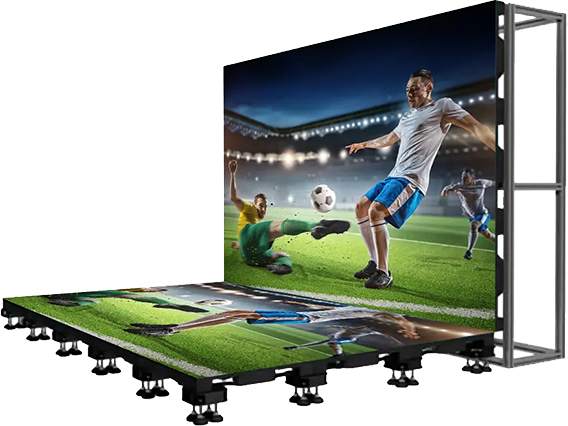
LED floor screens—also known as LED dance floors or LED tile displays—stand out as one of the most durable and interactive LED solutions on the market. Unlike conventional LED screens, they must handle constant foot traffic, absorb impact, and maintain stable performance under demanding conditions. To achieve this, manufacturers design a multi-layer internal structure that integrates strength, protection, and intelligent interaction. Understanding this structure helps you choose the right product and evaluate its long-term reliability.
The base structure forms the backbone of the LED floor screen. Manufacturers typically use die-cast aluminum, sheet metal, or aluminum alloy frames, depending on the application and budget.
Die-cast aluminum delivers high strength, excellent heat dissipation, and precise construction. It works best for high-end, outdoor, or heavy-load environments.
Sheet metal offers a cost-effective and flexible solution, making it suitable for indoor or budget-sensitive projects.
Aluminum alloy frames reduce weight and simplify installation, which makes them ideal for temporary setups and mobile stages.
To further enhance durability, designers integrate honeycomb reinforcements or X-shaped support structures inside the base. These designs distribute pressure evenly when people walk or jump on the surface. In addition, manufacturers add 3–5 mm shock-absorbing silicone pads at the bottom to reduce vibration and protect internal components.
Above the structural base sits the electronic core of the system. This layer includes several critical components:
LED PCB (Printed Circuit Board): It houses high-brightness LED chips, typically using SMD or COB packaging, along with driver ICs that control pixel behavior.
Aluminum substrate: Positioned beneath the PCB, it works with thermal interface materials (such as silicone pads) to improve heat dissipation.
Power supply module: Usually based on a switching power design, it ensures stable and efficient energy delivery across the entire panel.
Together, these elements maintain consistent brightness, color accuracy, and reliable operation—even under continuous use.
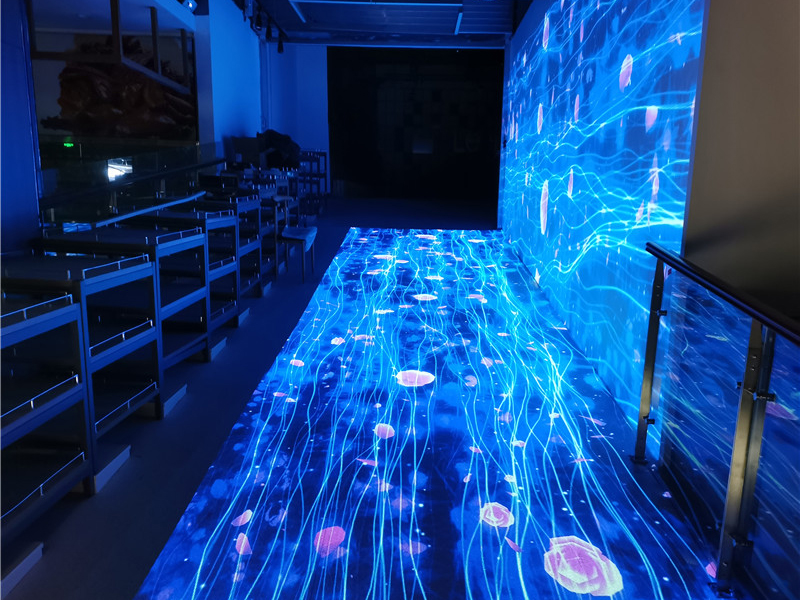
What truly differentiates LED floor screens from traditional displays is their interactivity. This capability comes from an integrated sensor layer.
Manufacturers use various sensor technologies, including pressure sensors, capacitive sensors, infrared sensors, or even radar-based modules. When someone steps on the screen, the sensors immediately detect the position and transmit coordinate data to the control system. As a result, the system triggers real-time visual effects—such as ripples, lighting changes, or animations—directly under the user’s feet.
This layer transforms a standard display into an immersive, responsive experience, which is why LED floor screens are widely used in stages, exhibitions, and entertainment venues.
The top layer protects the entire system while ensuring user safety. Manufacturers typically use tempered glass or anti-slip polycarbonate (PC) panels with a thickness of 8–12 mm.
These materials provide several key benefits:
High impact resistance to withstand heavy foot traffic
Anti-slip surfaces to prevent accidents
Optical clarity for vivid image display
In addition, the screen surface usually meets IP65 to IP67 protection standards. Designers seal all joints with silicone gaskets and use waterproof aviation connectors to block water and dust intrusion.
Thanks to this robust design, LED floor screens can support static loads of 1.5 to 3 tons per square meter. They also handle dynamic impact effectively, making them suitable for high-intensity environments such as concerts and public installations.
An LED floor screen is far more than a display—it is a fully engineered system built to handle pressure, motion, and interaction simultaneously. From the reinforced base structure to the intelligent sensor layer and rugged protective surface, every component serves a specific purpose.
By understanding this internal structure, you can make more informed decisions when selecting a product. More importantly, you can ensure that your LED floor installation delivers both performance and durability in even the most demanding applications.
 +86 18688923792
  andy@tosled.com