





Industry news


View: 364

Release time:2026-06-12
When shopping for an LED display, many buyers focus on a single specification: refresh rate. It is easy to assume that a higher number automatically means a better screen, but the reality is far more complex.
Refresh rate certainly matters, especially for broadcasting, live events, and virtual production. However, it is only one part of the overall performance equation. Driver ICs, scan mode, grayscale processing, calibration, and system design all influence how an LED display performs in real-world conditions.
An LED display’s refresh rate refers to how frequently the screen updates its output each second, typically measured in hertz (Hz). Higher refresh rates can reduce flicker and produce smoother visuals, particularly when cameras capture the display.
However, two LED screens with identical advertised refresh rates may perform very differently. The quality of the supporting hardware and image processing determines whether those numbers translate into visible improvements.
For applications involving live video, sports, concerts, or television production, a high refresh rate offers several important advantages:
It minimizes visible flicker.
It reduces scan lines and banding on camera.
It improves motion rendering during fast-moving content.
It creates a more comfortable viewing experience for audiences.
It helps produce cleaner footage for broadcasting and live streaming.
These benefits become increasingly important as camera technology advances and production standards become more demanding.
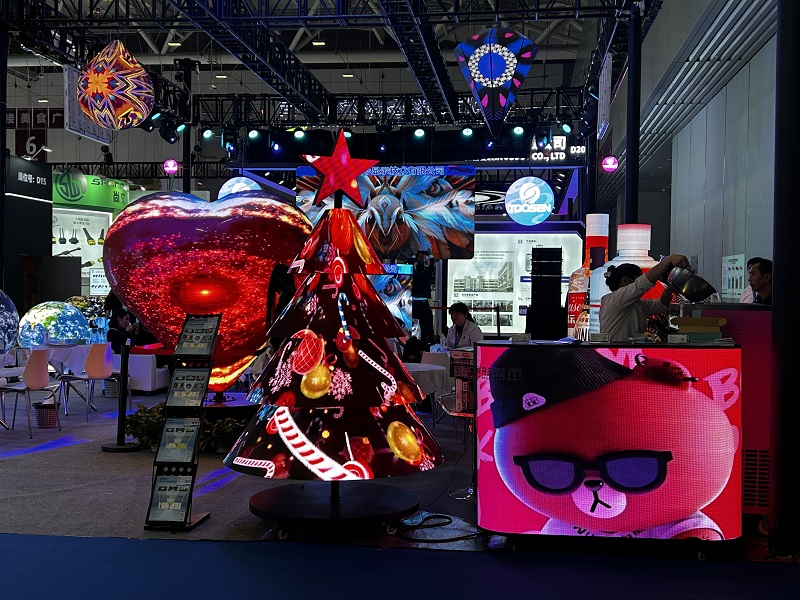
Many buyers compare products based solely on specifications such as 3,840 Hz or 7,680 Hz. While these figures may look impressive, they do not guarantee superior image quality.
In practice, manufacturers can achieve high refresh-rate figures under specific operating conditions that may not represent everyday use. A display with a slightly lower but stable refresh rate and excellent image processing may outperform one with a higher advertised specification.
As a result, evaluating an LED screen requires looking beyond a single headline number.
The driver IC controls how individual LEDs operate. High-quality chips provide more stable brightness control, smoother grayscale transitions, and more consistent image reproduction.
Scan rate directly affects how pixels are driven. A well-optimized scan design contributes to better visual stability and camera performance, while poor implementation can introduce artifacts even if the display advertises a high refresh rate.
Refresh rate works together with grayscale processing. Displays with higher grayscale precision reproduce subtle gradients and shadow details more accurately, producing images that appear more natural and refined.
The receiving cards, control system, power supply, and calibration process all influence final image quality. Weaknesses in any of these components can limit the practical benefits of a high refresh rate.
Different projects require different levels of performance.
Retail stores and digital signage: Moderate refresh rates often provide excellent results because viewers mainly consume static images or standard video.
Stage events and rental displays: Higher refresh rates help maintain smooth visuals and improve camera compatibility.
Broadcast studios and virtual production: Premium refresh rates combined with advanced grayscale control and professional calibration become essential to eliminate flicker and deliver camera-ready images.
Choosing the right solution depends on the environment rather than simply selecting the highest specification available.
Refresh rate should never be viewed in isolation. Brightness, contrast ratio, color accuracy, grayscale performance, uniformity, scan technology, and driver quality all contribute to the final viewing experience.
Before making a purchasing decision, request demonstration videos, conduct camera tests whenever possible, and review the complete technical specifications instead of relying on a single marketing figure.
A high refresh rate is an important feature, but it is not a guarantee of exceptional image quality. The best LED displays combine fast refresh rates with advanced electronics, precise control systems, and careful engineering to deliver stable, vibrant, and flicker-free performance.
In other words, the number on the specification sheet tells only part of the story. To judge an LED display accurately, you need to consider how the entire system works together in real-world applications.
 +86 18688923792
  andy@tosled.com