

Industry news


View: 1026

Release time:2026-04-27
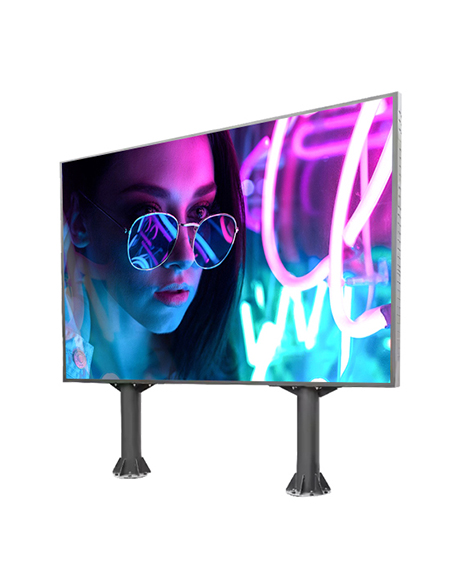
Outdoor LED displays face complex structural challenges. Wind, weight, and environmental loads all impact safety. If you miscalculate structural load, you risk catastrophic failure. This guide walks you through a practical and engineering-focused calculation method.
Start by understanding what loads act on the structure. You should never calculate weight alone.
Dead load (self-weight)
LED panels, steel structure, power supplies, cables
Wind load (critical for outdoor screens)
Live load (maintenance personnel)
Seismic load (in earthquake zones)
Among these, wind load usually dominates design.
Dead load is the easiest to calculate.
Example:
LED cabinet: 35 kg/m²
Steel structure: 40 kg/m²
Accessories: 10 kg/m²
Total ≈ 85 kg/m²
Multiply by total screen area:
Total Weight
Wind load is the most critical factor for outdoor LED displays.
F = wind force (N)
V = wind speed (m/s)
C_d = drag coefficient (typically 1.2–1.8 for LED screens)
A = projected area (m²)
Wind speed: 30 m/s
Area: 50 m²
Drag coefficient: 1.5
F
This force directly impacts structural design and anchoring.
Different installation methods significantly affect load distribution.
Wall-mounted → load transfers to building
Ground-supported → requires foundation design
Hanging/suspended → critical for tensile strength
Also consider:
Screen aspect ratio
Porosity (perforated designs reduce wind load)
Never rely on raw calculations.
Static load: 1.5×
Wind load: 2.0× or higher
This ensures the structure remains safe under extreme conditions.
After calculating loads, verify each structural element:
Steel beams (bending stress)
Columns (buckling)
Anchors and bolts (shear/tension)
Weld strength
Use structural analysis software if the project is large.
Always align with regional regulations:
Wind speed standards
Seismic codes
Building attachment rules
Ignoring compliance can lead to legal and safety risks.
Reduce weight using lightweight cabinets
Optimize airflow to reduce wind pressure
Use corrosion-resistant materials
Design for easy maintenance access
 +86 18688923792
  andy@tosled.com