





Industry news


View: 563

Release time:2026-07-02
As LED display technology continues to evolve, COB LED displays are becoming increasingly popular in applications ranging from corporate meeting rooms to broadcast studios and control centers.
But one question is frequently asked by buyers and system integrators:
Are COB LED displays actually more efficient than traditional LED displays?
The short answer is yes—but efficiency goes beyond energy consumption.
COB technology offers advantages in power usage, durability, image quality, and maintenance. However, whether it's the best choice depends on your application and budget.
Let's take a closer look.
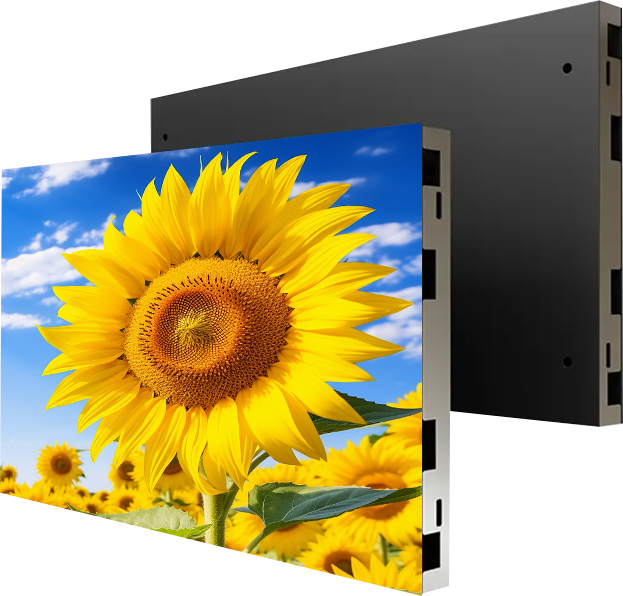
A COB LED display mounts multiple LED chips directly onto the PCB (Printed Circuit Board) instead of packaging each LED separately like traditional SMD (Surface-Mounted Device) technology.
This manufacturing method creates a smoother display surface while reducing the number of solder joints and exposed components.
The result is a display that is more robust and better suited for fine-pixel-pitch applications.
One of COB technology's biggest advantages is improved energy efficiency.
Because the LED chips are mounted directly onto the board, electrical resistance is reduced and heat is transferred more efficiently.
Benefits include:
Lower power consumption
Less energy wasted as heat
Reduced operating costs
Better long-term energy savings
For businesses running LED displays for many hours each day, these savings can become significant over the display's lifetime.
Heat is one of the main factors affecting LED lifespan.
COB displays provide a larger contact area between the LED chips and the circuit board, allowing heat to spread more evenly.
This results in:
Lower operating temperatures
More stable performance
Reduced thermal stress
Longer component life
Efficient heat management also decreases the likelihood of brightness degradation over time.
Traditional SMD LEDs consist of individually packaged components mounted on the PCB.
COB technology integrates the LED chips into a single protective structure, reducing the number of vulnerable solder joints.
Advantages include:
Better resistance to vibration
Improved impact resistance
Lower risk of dead pixels
Greater reliability in continuous operation
This makes COB displays particularly suitable for mission-critical environments such as control rooms and broadcast studios.
Because the LED chips are protected by a durable surface coating, COB displays are less susceptible to:
Dust
Moisture
Static electricity
Accidental impacts
As a result, maintenance frequency is often lower than with conventional SMD displays.
Reduced maintenance means:
Less downtime
Lower service costs
Improved long-term reliability
Efficiency isn't just about electricity—it also includes how effectively a display delivers visual performance.
COB displays typically offer:
Higher contrast ratios
Deeper black levels
Better color consistency
Wider viewing angles
Reduced pixelation at close viewing distances
These characteristics make COB technology especially attractive for fine-pitch indoor LED displays where viewers are positioned close to the screen.
Not necessarily.
Although COB technology offers many advantages, it isn't the ideal solution for every project.
Traditional SMD displays may still be the better option when:
Large outdoor displays are required
Budget is the primary concern
Standard pixel pitches are sufficient
Easy module replacement is a priority
For many outdoor advertising applications, SMD technology continues to provide excellent performance at a lower initial investment.
COB technology is an excellent choice for applications such as:
Corporate meeting rooms
Command and control centers
Broadcast studios
Television production
Luxury retail stores
Museums
Exhibition halls
High-end digital signage
These environments benefit from superior image quality, long operating hours, and minimal maintenance.
So, are COB LED displays more efficient?
In many indoor applications, the answer is yes.
COB technology delivers efficiency in multiple ways:
Lower power consumption
Better thermal management
Longer service life
Reduced maintenance
Higher reliability
Outstanding visual performance for close viewing
However, efficiency should always be evaluated in the context of your project. For fine-pitch indoor installations where image quality and durability are top priorities, COB LED displays are often worth the higher upfront investment. For large-scale outdoor advertising or cost-sensitive projects, traditional SMD displays may still provide the best balance of performance and value.
Choosing the right technology ultimately depends on your installation environment, viewing distance, budget, and long-term operating goals.
Generally, yes. COB LED displays are designed with more efficient heat transfer and electrical performance, which can reduce power consumption under comparable operating conditions. Actual energy savings vary depending on brightness settings, pixel pitch, and display configuration.
Most COB LED displays are designed for indoor, fine-pixel-pitch applications. While outdoor COB products are emerging, SMD technology remains the more common and proven choice for large outdoor LED displays due to its maturity and wider range of available specifications.
If your project requires exceptional image quality, close viewing distances, long daily operating hours, and low maintenance, a COB LED display can offer excellent long-term value. For budget-driven projects or standard outdoor installations, an SMD LED display may be the more cost-effective solution.
 +86 18688923792
  andy@tosled.com