




Company news


View: 19

Release time:2026-11-24
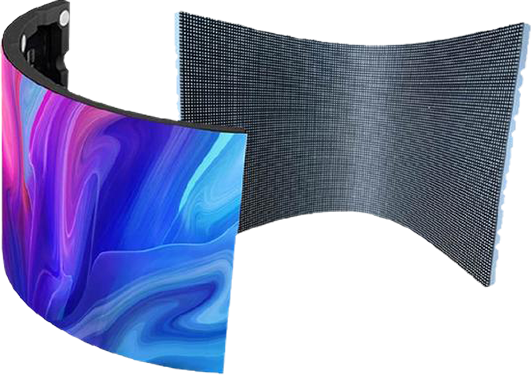
A curved LED display video wall can create a smooth visual effect in shopping malls, exhibition halls, conference centers, and commercial spaces. However, its installation requires more than planning the screen shape and mounting structure. The electrical system must also be designed to support the entire display.
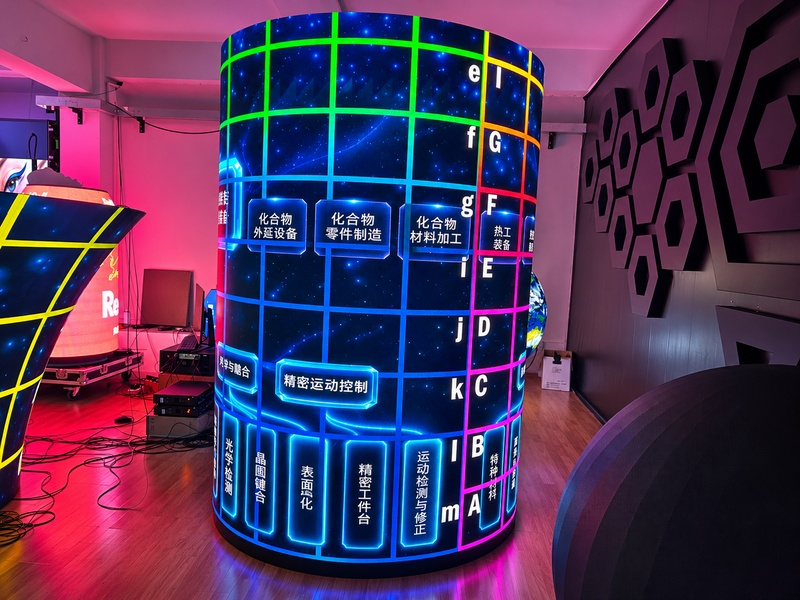
One important question is how many power circuits are needed before installation.
If the power distribution is not properly calculated, the display may experience circuit overload, unexpected shutdowns, voltage drops, or unstable operation. These problems can become difficult to fix after the screen and supporting structure have been installed.
For this reason, curved LED display power distribution planning should begin during the project design stage.
Unlike a standard flat LED video wall, a curved LED display may use flexible modules or specially designed cabinets to follow a particular radius.
Its electrical layout can also be more complicated. Power cables may need to pass through curved structures, limited installation spaces, or different maintenance sections.
If all modules are connected to too few circuits, the electrical load may exceed the available capacity.
Common problems include:
Circuit breakers tripping during high-brightness operation.
Uneven power distribution between screen sections.
Overheating cables and electrical connectors.
Voltage drops along long cable routes.
Difficult maintenance when power connections are poorly arranged.
A proper power plan helps prevent these problems before installation begins.
Before calculating the circuit requirements, collect the main technical information about the LED display.
The most important details include:
Screen dimensions: Measure the actual curved display surface, not only its front projection. For a curved wall, the arc length and screen height are important for calculating the total display area.
Pixel pitch: Different pixel pitches may use different LED modules and electrical configurations.
Maximum power consumption: This value is essential for calculating the electrical capacity required under demanding operating conditions.
Typical power consumption: This helps estimate normal electricity usage during daily operation.
Input voltage: Confirm whether the project uses 110V, 120V, 220V, or 230V AC power.
Power supply configuration: Check the number of power supplies, distribution points, and electrical connections.
These details help engineers calculate the load instead of relying on rough estimates.
The first step is to calculate the maximum power demand of the entire curved LED video wall.
The basic formula is:
Total Maximum Power = Display Area × Maximum Power Consumption per Square Meter
For example, assume a curved LED display has:
Total display area: 12 m²
Assumed maximum power: 600 W/m²
The calculation is:
12 × 600 = 7,200 W
Therefore, the estimated maximum power requirement is 7.2 kW.
This is an illustrative calculation, not a fixed TOOSEN product specification. The actual maximum power must come from the selected LED display configuration.
It is also important to distinguish maximum power from typical power. Normal video playback usually consumes less electricity than a full-white image displayed at high brightness.
However, circuit planning should use the confirmed maximum load rather than relying only on average consumption.
After calculating total power, the next step is to estimate the current.
The basic formula is:
Current (A) = Power (W) ÷ Voltage (V)
Using the previous example:
At 230V:
7,200 ÷ 230 = 31.3A
At 120V:
7,200 ÷ 120 = 60A
This shows why the available voltage must be confirmed before selecting the power distribution system.
Engineers should also consider the permitted continuous load of each circuit.
For an illustrative 20A circuit designed around an 80% continuous-load limit, the usable capacity is 16A.
At 230V:
230 × 16 = 3,680W
At 120V:
120 × 16 = 1,920W
Based on the 7,200W example, the estimated minimum would be:
230V: 7,200 ÷ 3,680 = 1.96, rounded up to 2 circuits.
120V: 7,200 ÷ 1,920 = 3.75, rounded up to 4 circuits.
These figures are preliminary estimates. Actual circuit selection must also consider power factor, equipment characteristics, cable length, voltage drop, protective devices, and local electrical regulations.
A qualified electrician should confirm the final design.
Calculating the total number of circuits is only part of the work. Their physical distribution also matters.
For a large curved LED video wall, dividing the screen into several power zones can make the installation easier to manage.
For example, the left, middle, and right sections can have separate power distribution points, depending on the screen structure and electrical design.
This approach offers several advantages:
Reduces excessive loading on individual branches.
Makes electrical inspection easier.
Helps technicians identify faulty sections.
Simplifies maintenance and replacement.
Improves cable organization inside the supporting structure.
For large projects using three-phase power, the electrical load should also be balanced across the phases.
Power cables should follow planned routes without excessive bending, compression, or contact with sharp metal edges.
A complete curved LED display power distribution system may include:
Distribution cabinet: Organizes the incoming power supply and distributes electricity to different screen sections.
Circuit breakers: Protect individual circuits against excessive current.
Power cables: Must have suitable capacity based on current, cable length, installation conditions, and local requirements.
Power connectors: Provide secure connections between cabinets, modules, and power distribution points.
Grounding system: Helps protect equipment and personnel from electrical faults.
Surge protection: Helps reduce the risk of damage caused by electrical surges where required by the project design.
For curved installations, cable length and internal space should be considered carefully. A well-organized cable layout makes future maintenance much easier.
Power calculations should be followed by practical testing.
Before powering on the complete display, technicians should inspect all electrical connections and confirm that the grounding system is properly installed.
During commissioning, check the following:
Measure the input voltage.
Check current on each power circuit.
Test the screen with normal video content.
Display high-brightness and full-white images.
Monitor cable and connector temperatures.
Check whether circuit breakers operate normally.
Inspect voltage stability across different screen sections.
For larger installations, record the measurements of each power zone.
This makes it easier to identify abnormal loading before the display enters regular operation.
Q1: How many circuits does a curved LED video wall need?
It depends on the total display area, maximum power consumption, input voltage, and circuit capacity. Calculate the total maximum load first, then determine the required number of circuits.
Q2: Should I use maximum or typical power consumption for circuit planning?
Use maximum power consumption for electrical capacity planning. Typical power consumption is more suitable for estimating daily electricity costs.
Q3: Can a large curved LED display use three-phase power?
Yes. Three-phase power may be suitable for large installations with higher electrical loads. The final configuration depends on the total current, available building supply, and local electrical requirements.
Q4: Why should power cables be planned before installing the curved screen?
Curved structures may have limited internal space. Planning cable routes in advance helps prevent cable compression, difficult connections, and unnecessary maintenance problems.
TOOSEN provides customized LED display solutions for commercial spaces, shopping malls, exhibitions, and other professional applications.
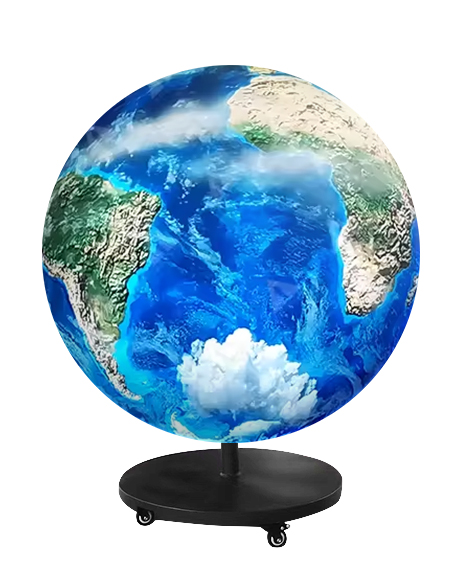
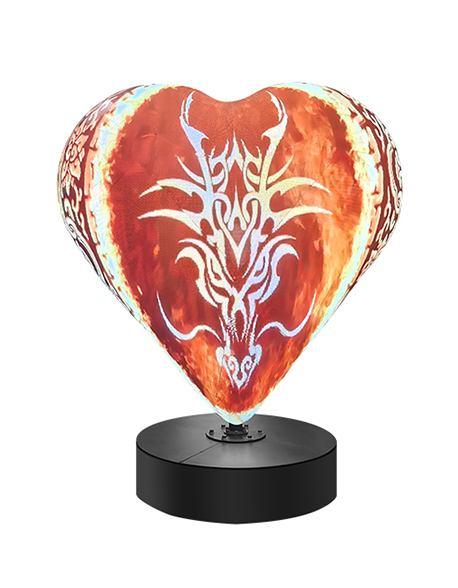
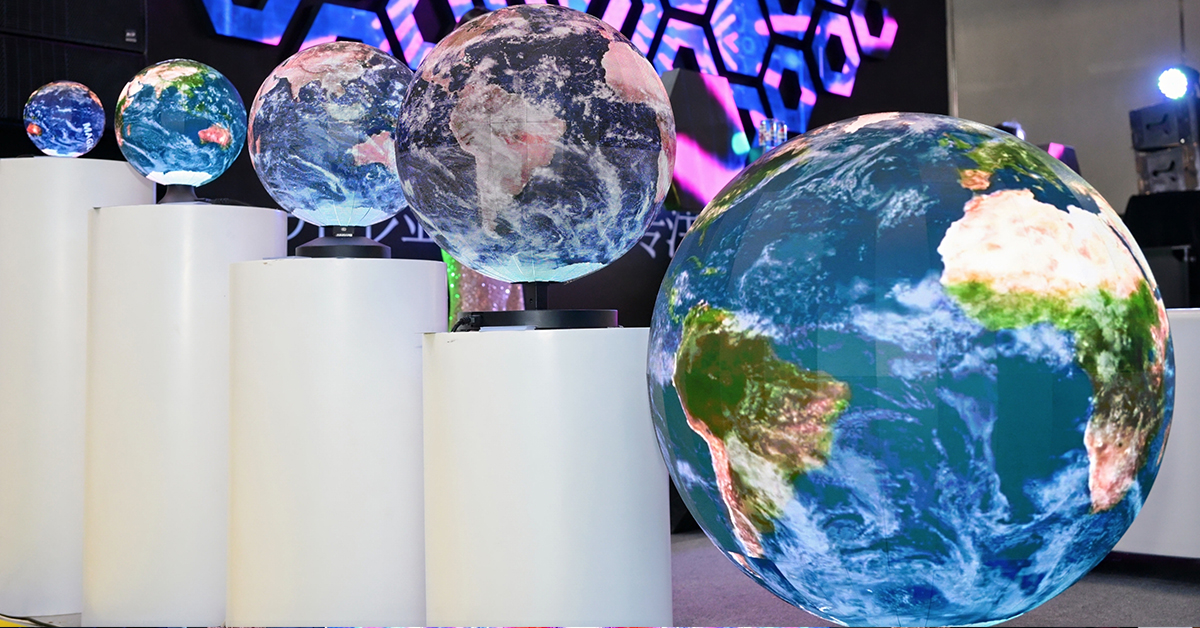
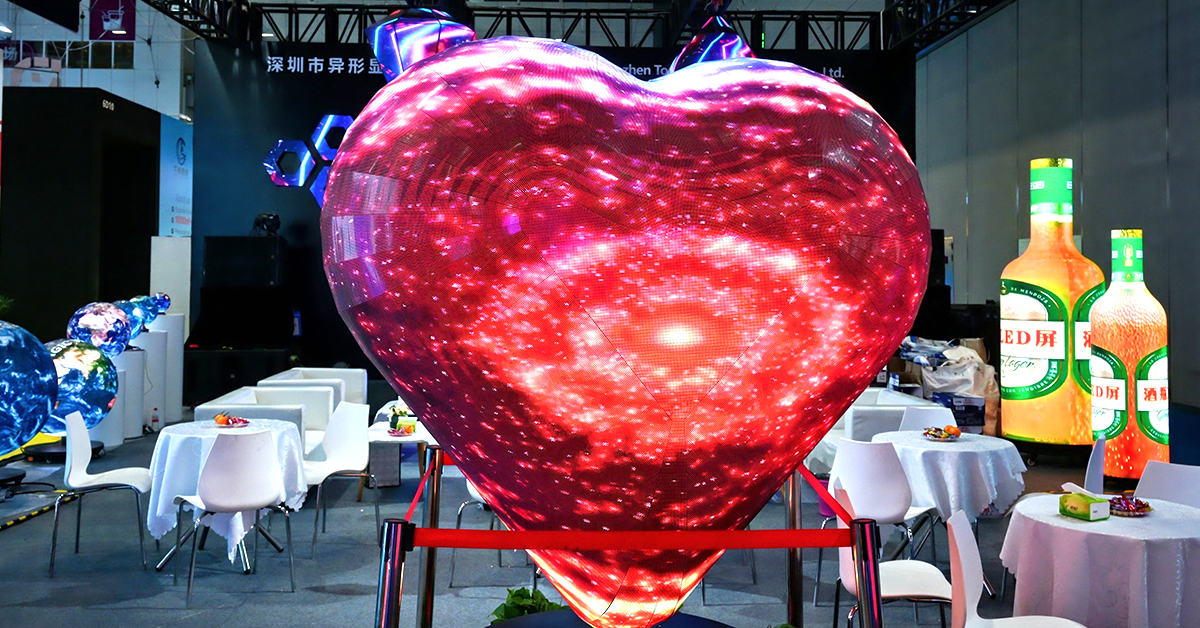
Its product range includes curved LED displays, flexible LED screens, spherical LED displays, and other custom-shaped LED display solutions.
Different pixel pitches, cabinet configurations, and installation structures are available according to project requirements.
For curved LED video wall projects, TOOSEN can work with customers to review screen dimensions, curvature, installation conditions, and electrical requirements before production.
A reliable LED display project starts with proper planning. By calculating power requirements, organizing circuit distribution, and checking electrical connections before installation, project teams can reduce avoidable problems and achieve more stable display operation.
Visit https://www.toosen.com/ to learn more about TOOSEN LED display solutions.
 +86 18688923792
 andy@tosled.com